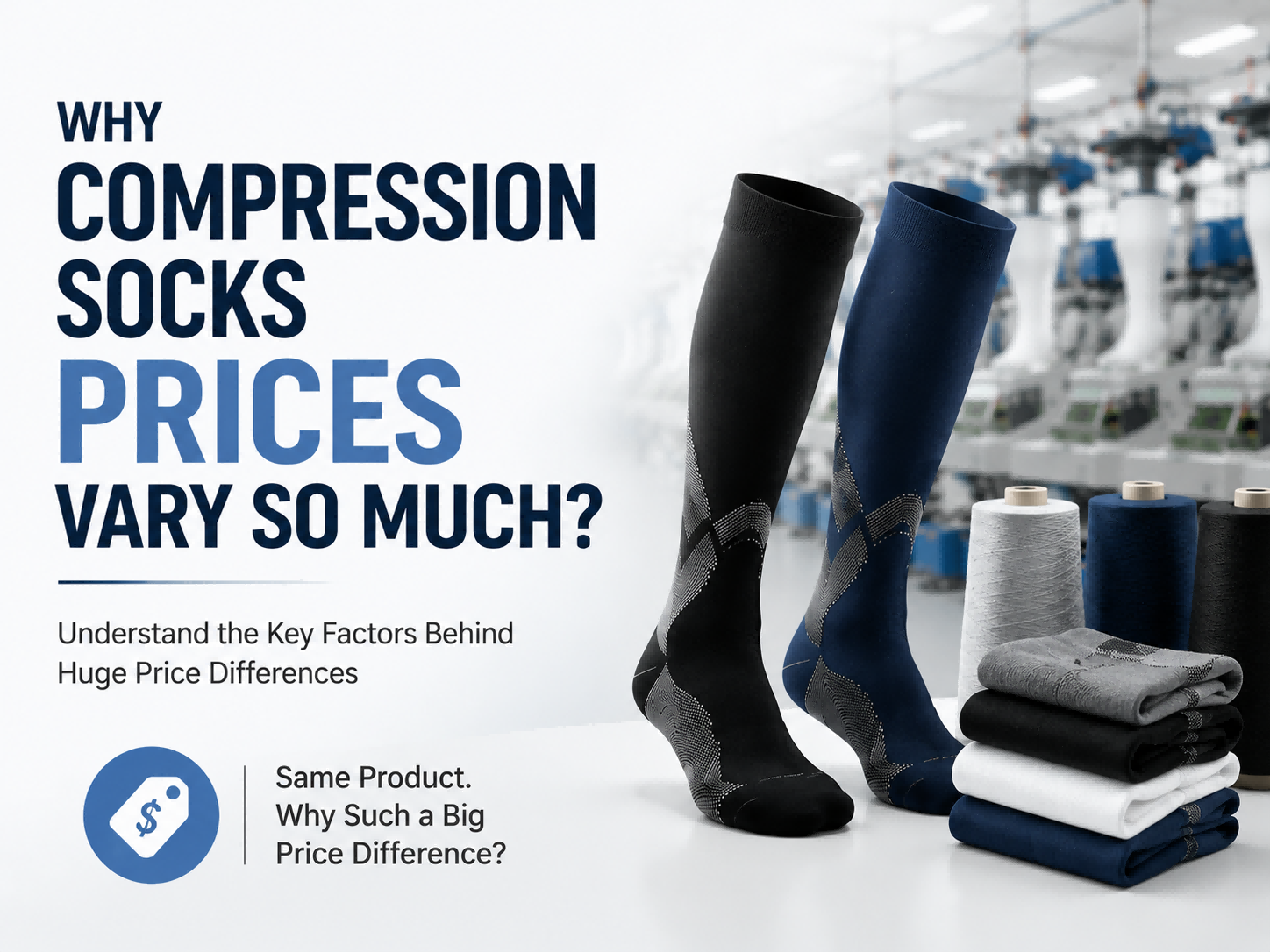
Why Compression Socks Prices Vary So Much
1. Material Quality Makes a Big Difference
Compression socks are not made from a single material.
The yarn combination directly affects both cost and performance.
Common materials include:
- Nylon (durability & structure)
- Spandex (elasticity & compression control)
- Cotton (comfort)
- Bamboo fiber (breathability & eco positioning)
- Silver fiber (antibacterial, premium segment)
Lower-priced products often reduce material cost by:
- Using lower-grade nylon
- Reducing spandex ratio
- Skipping functional fibers
From our production experience, even a small change in yarn ratio can significantly affect cost and compression stability.
2. Different Compression Standards
Not all compression socks follow the same pressure control system.
For example:
- Standard retail socks → general compression range
- Medical-grade socks → controlled graduated compression
- High-end medical use → strict mmHg calibration
Some factories do not perform real compression testing, which lowers cost but also reduces consistency.
In contrast, factories with proper testing systems will have higher production costs but more stable output.
3. Manufacturing Technology Differences
Production method is another key factor:
- Circular knitting → efficient, cost-effective, suitable for mass production
- Flat knitting → higher precision, more customization, higher cost
Circular knitting is often used for retail products, while flat knitting is more common in medical-grade or orthopedic applications.
This alone can create noticeable price gaps between suppliers.
4. Certification and Compliance Costs
Certified factories usually have higher production costs because of:
- ISO 13485 quality systems
- CE MDR compliance requirements
- FDA-related documentation (for U.S. market)
- OEKO-TEX material testing
Some suppliers skip certifications entirely, which lowers price but increases risk for importers and brands.
For medical distributors, certification is often not optional.
5. Production Scale and MOQ Impact
Unit price is also affected by order quantity.
- Larger orders → better yarn purchasing cost
- Small batch orders → higher production setup cost per unit
- Custom designs → additional setup and sampling cost
From our factory experience, MOQ differences often explain part of the price gap between suppliers.
6. Packaging and Branding Level
Many buyers underestimate packaging cost.
For example:
- Standard bulk packaging → low cost
- Retail box packaging → moderate cost
- Private label branding + custom box + labeling → higher cost
In retail markets like Amazon or pharmacy chains, packaging often becomes part of the brand value.
7. Why “Cheap” Is Not Always Cheaper
From a sourcing perspective, low price can sometimes mean:
- Inconsistent compression level
- Weak elasticity after washing
- Poor sizing accuracy
- Higher return rates
We’ve seen cases where buyers initially chose the lowest price supplier, but later switched due to quality instability and customer complaints.
Final Thoughts
Compression socks pricing is not random.
It reflects a combination of:
- Material selection
- Compression accuracy
- Manufacturing method
- Certification level
- Order scale
- Branding requirements
For B2B buyers, the key is not to compare prices alone, but to compare what is actually behind the price.
Looking for a Reliable Compression Socks Manufacturer?
We provide OEM & ODM compression socks with:
- Stable graduated compression control
- Circular & flat knitting production options
- ISO 13485 certified manufacturing system
- Private label & packaging support
- Flexible MOQ for new brands
How to Choose Compression Sock Levels
Compression Socks MOQ Explained for Buyers
Related Article