Medical Compression Socks Product Development Process
Developing a medical compression sock is more complex than creating a standard hosiery product. For healthcare companies, medical brands, and distributors, every stage — from initial concept to final production — requires careful planning, technical expertise, and quality control.
A successful compression therapy product must balance medical performance, patient comfort, durability, and regulatory requirements.
Working with an experienced medical compression socks manufacturer can help companies transform an idea into a reliable product ready for market.
This guide explains the complete product development journey:
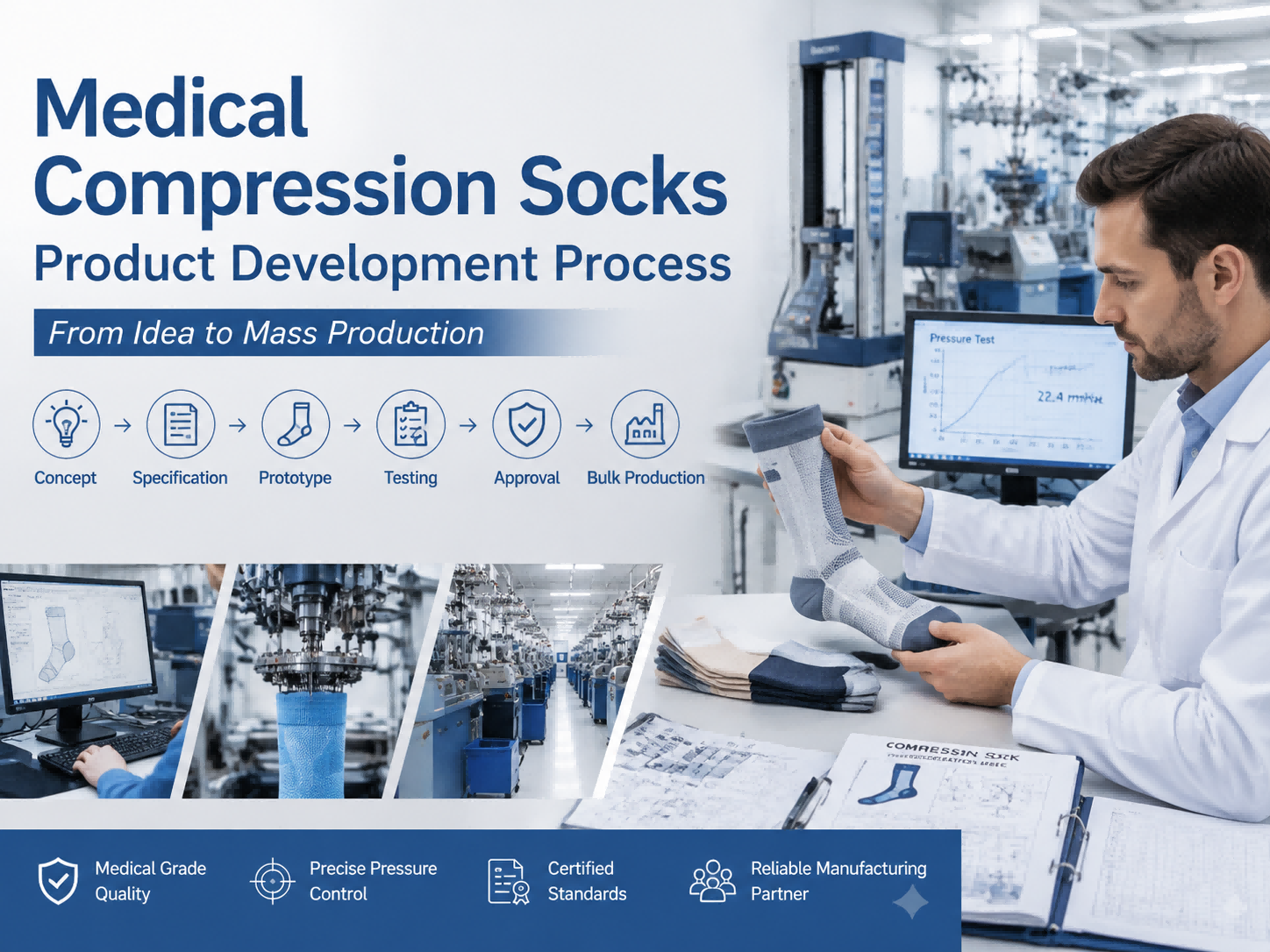
Concept → Specification → Prototype → Testing → Approval → Bulk Production
1. Concept Development: Defining the Product Requirements
Every medical compression sock project starts with a clear product concept.
Before production begins, brands need to define:
- Target users
- Medical application
- Compression level
- Product style
- Market requirements
- Regulatory expectations
Common applications include:
- Anti-embolism stockings for hospitals
- Compression socks for varicose vein management
- Travel compression socks
- Post-surgery recovery stockings
- Chronic venous disease management products
At this stage, buyers should consider:
Target Market
Different markets may require different product standards.
For example:
- European medical markets may focus on CE MDR compliance
- US healthcare markets may require FDA-related requirements
- Professional compression therapy products may require pressure accuracy testing
A clear product direction helps avoid unnecessary modifications during later development stages.
2. Specification Development: Turning Ideas Into Technical Requirements
After defining the concept, the next step is creating detailed product specifications.
A professional specification sheet usually includes:
Compression Level
Compression performance is one of the most important factors.
Common medical compression levels include:
- 15-20 mmHg
- 20-30 mmHg
- 30-40 mmHg
Graduated compression means the pressure is highest around the ankle and gradually decreases toward the upper leg.
Product Structure
Specifications should define:
- Knee-high or thigh-high design
- Open toe or closed toe
- Silicone grip band
- Heel and toe reinforcement
- Anatomical shaping
- Seam construction
Material Selection
Medical compression socks commonly use:
- Nylon / Microfiber Nylon
- Lycra® Elastane
- Polyester
- Cotton blends
- Antibacterial fibers
The material choice affects:
- Compression stability
- Breathability
- Skin comfort
- Product lifespan
Size System
Medical compression products require accurate sizing.
Specifications normally include:
- Ankle circumference
- Calf circumference
- Thigh circumference
- Leg length
- User weight/height recommendations
Incorrect sizing can reduce compression effectiveness and user satisfaction.
3. Prototype Development: Creating the First Sample
Once specifications are confirmed, manufacturers begin prototype development.
The prototype stage allows brands to evaluate:
- Product appearance
- Compression feeling
- Fit and comfort
- Material performance
- Design details
For medical compression socks, prototype development may involve:
Knitting Adjustment
Compression socks require precise knitting parameters, including:
- Yarn tension
- Machine settings
- Compression zones
- Stitch structure
Advanced manufacturers use medical-grade knitting machines to achieve consistent pressure distribution.
Sample Evaluation
Brands typically review:
- Size fitting
- Pressure sensation
- Wearing comfort
- Fabric softness
- Color and appearance
Feedback from the prototype stage helps optimize the final design.
4. Testing: Ensuring Medical Performance and Quality
Testing is a critical step before mass production.
Medical compression socks must meet strict performance requirements.
Important testing includes:
Compression Pressure Testing
Manufacturers verify:
- Ankle pressure
- Pressure gradient
- Compression consistency
Professional testing equipment helps ensure every production batch delivers stable compression performance.
Material Testing
Materials may be tested for:
- Stretch recovery
- Color fastness
- Washing durability
- Fiber performance
Wear Testing
Real-world testing evaluates:
- Comfort during long-term wear
- Skin feeling
- Ease of putting on and removing
- Product durability
A successful medical compression product must provide both therapeutic performance and user comfort.
5. Approval: Preparing for Market Launch
After testing is completed, the product enters the approval stage.
Healthcare companies usually review:
- Technical documents
- Test reports
- Product specifications
- Packaging information
- Compliance documents
Depending on the target market, additional requirements may apply.
Common documentation includes:
- Product technical file
- Declaration of Conformity
- Quality management documents
- Testing reports
For medical brands, selecting a manufacturer with experience in regulatory documentation can significantly reduce development risks.
6. Bulk Production: Moving From Sample to Market
After final approval, the product moves into mass production.
A reliable manufacturing process includes:
Production Preparation
Before production:
- Raw materials are confirmed
- Machine settings are finalized
- Quality standards are defined
- Production schedule is arranged
Manufacturing Process
Typical production steps include:
- Yarn preparation
- Knitting
- Toe closing
- Washing and finishing
- Quality inspection
- Packaging
Quality Control
During bulk production, manufacturers monitor:
- Compression accuracy
- Size consistency
- Appearance defects
- Stitch quality
- Packaging accuracy
Strict quality control ensures every pair meets the approved sample standard.
Why Choose an Experienced Medical Compression Socks Manufacturer?
Developing medical compression socks requires more than knitting capability.
A professional partner should provide:
Technical Expertise
Experience with:
- Graduated compression technology
- Medical knitting structures
- Pressure control
Development Support
Including:
- Product consultation
- Material selection
- Prototype adjustment
- Testing support
Manufacturing Capability
Including:
- Stable production capacity
- Quality management system
- Export experience
The right manufacturing partner helps healthcare companies reduce development time and bring reliable compression therapy products to market faster.
Conclusion
The development of medical compression socks is a structured process that combines medical requirements, textile engineering, and quality management.
From the initial concept to final mass production, each step plays an important role:
Concept → Specification → Prototype → Testing → Approval → Bulk Production
For healthcare companies, medical distributors, and private label brands, partnering with an experienced compression socks manufacturer is essential to creating products that meet market expectations and deliver consistent medical performance.
What Medical Brands Should Know Before Launching Compression Stockings
Private Label Compression Socks Development Cost
Related Article