Private Label Compression Socks Development Cost
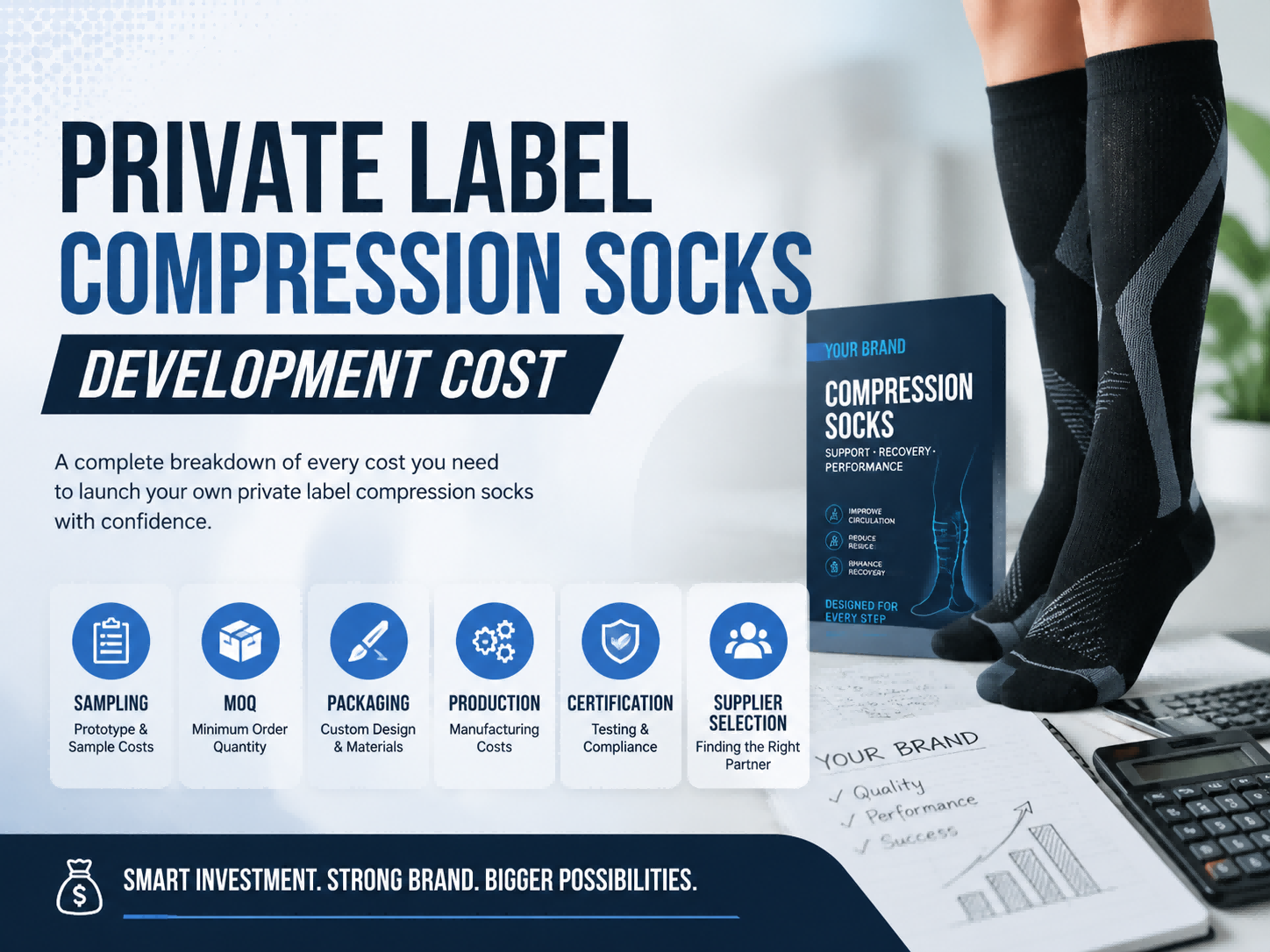
A Complete Cost Breakdown for Brand Owners and Professional Buyers
Launching a private label compression socks brand requires more than placing a production order. From product development and sampling to packaging, certification, and mass production, each stage involves different costs that buyers need to understand before working with a manufacturer.
For Amazon sellers, distributors, healthcare companies, and startup brands, having a clear development budget can help reduce risks and choose the right manufacturing strategy.
This guide explains the main costs involved in developing private label compression socks.
1. Product Sampling Cost
Before starting bulk production, professional buyers usually need samples to confirm:
- Compression level
- Fabric quality
- Size and fit
- Color accuracy
- Logo placement
- Packaging details
Sample costs vary depending on product complexity.
For standard compression socks, sample fees are usually relatively low. However, customized products may require additional development work, including:
- Special yarn selection
- Custom knitting patterns
- Logo design adjustment
- Compression testing
A typical development process may include:
- Initial sample
- Sample modification
- Final approval sample
Working with an experienced compression socks manufacturer can reduce repeated sampling costs by improving the first sample success rate.
2. Mold and Cylinder Development Cost
Unlike ordinary socks, compression socks require precise knitting technology to control pressure distribution.
For customized designs, manufacturers may need to develop:
- Knitting programs
- Custom patterns
- Special structures
- Logo knitting files
Some products may involve cylinder or tooling costs depending on the machine requirements and design complexity.
Costs may increase when developing:
- Unique compression zones
- Custom patterns
- Special sizes
- Medical-grade compression structures
For brands planning long-term sales, investing in customized development can create stronger product differentiation.
3. Packaging Development Cost
Private label brands often require customized packaging to build brand recognition.
Common packaging options include:
Standard Packaging
- Stock poly bags
- Standard labels
- Simple carton packing
Lower cost and suitable for product testing.
Customized Packaging
- Printed boxes
- Custom poly bags
- Brand labels
- Instruction cards
- Barcode stickers
Customized packaging usually requires a higher MOQ because packaging suppliers have minimum production quantities.
For example:
- Custom printed bags may require thousands of pieces
- Special packaging designs may require additional setup costs
Many new brands start with simple packaging and upgrade after confirming market demand.
4. Minimum Order Quantity (MOQ)
MOQ is one of the biggest cost factors when developing private label compression socks.
Manufacturers usually consider:
- Size quantity
- Color quantity
- Material requirements
- Packaging requirements
Typical MOQ depends on customization level:
| Product Type | Typical MOQ |
|---|---|
| Standard compression socks | Lower MOQ possible |
| Custom color socks | Higher MOQ |
| Custom yarn/material | Higher MOQ |
| Fully customized medical compression socks | Higher MOQ |
For startups, choosing existing factory designs with customized branding can significantly reduce initial investment.
For established brands, larger MOQ can provide better pricing and more customization options.
5. Production Cost
Production cost depends on several factors:
Compression Level
Medical compression socks require precise pressure control, such as:
- 15-20 mmHg
- 20-30 mmHg
- 30-40 mmHg
Higher compression levels require more technical control and testing.
Materials
Common materials include:
- Nylon / Microfiber
- Lycra® Elastane
- Polyester
- Cotton blends
- Special functional fibers
Premium materials improve comfort and durability but increase production costs.
Manufacturing Technology
Advanced knitting machines can provide:
- Better pressure accuracy
- Improved elasticity
- Higher product consistency
- More complex designs
For professional medical compression products, manufacturing capability is often more important than simply choosing the lowest price supplier.
6. Certification and Testing Costs
For brands entering healthcare or medical markets, certification may become one of the largest development investments.
Common requirements include:
Quality Management
- ISO 13485 (for medical device manufacturing)
- Quality control documentation
Market Compliance
Depending on the target market:
- FDA requirements for the US market
- CE MDR requirements for Europe
- Local registration requirements in specific countries
Product Testing
Testing may include:
- Compression pressure testing
- Material testing
- Color fastness testing
- Performance evaluation
Certification costs vary depending on product category and market strategy.
Estimated Private Label Compression Socks Development Budget
The total investment depends on your product positioning.
Small Brand / Market Testing
Suitable for:
- Amazon sellers
- New startups
- Online brands
Main investment:
- Basic samples
- Standard packaging
- Small MOQ production
Professional Brand Development
Suitable for:
- Healthcare companies
- Distributors
- Pharmacy suppliers
Investment includes:
- Multiple sampling rounds
- Custom designs
- Testing
- Certification support
- Customized packaging
How to Reduce Private Label Development Costs
Professional buyers can reduce development risks by:
1. Start With Existing Factory Designs
Using proven products allows brands to customize:
- Logo
- Packaging
- Colors
- Labels
while avoiding expensive product development.
2. Confirm Market Demand Before Full Customization
Many successful brands first test:
- One or two best-selling styles
- Limited colors
- Standard sizes
Then expand based on sales performance.
3. Work With an Experienced Compression Socks Manufacturer
A factory with medical compression experience can help with:
- Correct compression levels
- Size charts
- Material selection
- Production planning
- Certification guidance
This reduces trial-and-error costs during development.
Final Thoughts
Developing a private label compression socks brand requires investment in product development, manufacturing, branding, and compliance.
The biggest mistake for new buyers is focusing only on unit price. A reliable supplier, accurate compression technology, and consistent quality are more important for building a long-term brand.
By understanding sampling costs, MOQ requirements, packaging expenses, production factors, and certification needs, brands can create a realistic budget and choose the right development strategy.
About Compports
As an experienced compression socks manufacturer, Compports supports global brands with OEM and private label solutions, including medical compression socks, sports compression socks, anti-thrombosis stockings, custom packaging, and product development support.
From initial sampling to mass production, we help buyers build reliable compression products for healthcare, sports, and retail markets.
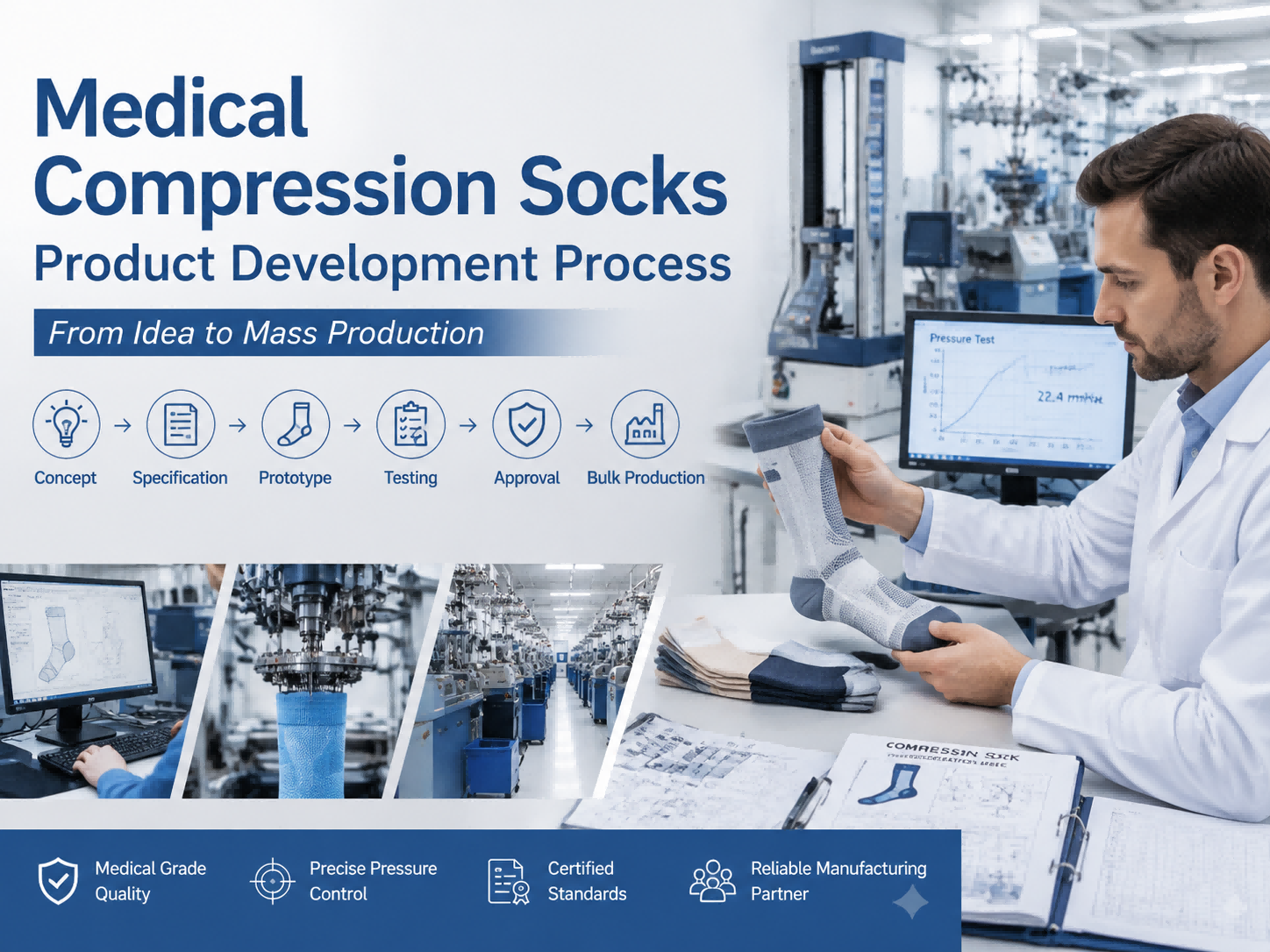
Medical Compression Socks Product Development Process
How to Build a Compression Socks Brand in 2026
Related Article