What Medical Brands Should Know Before Launching Compression Stockings

Launching a compression stockings brand requires more than selecting a fabric and creating packaging. Medical compression products are designed to provide controlled pressure distribution, support circulation, and meet specific healthcare requirements.
For medical brands, distributors, and healthcare companies entering the compression therapy market, choosing the right product structure, compression level, and manufacturing partner is critical.
Before developing your own compression stockings line, there are several key factors to consider:
- Product types and applications
- Compression classes and pressure levels
- Target users and market positioning
- Manufacturing standards and quality control
This guide explains the essential knowledge medical brands need before launching compression stockings.
1. Understand Different Types of Medical Compression Stockings
Compression stockings are available in different lengths and designs based on medical applications and user needs.
Choosing the right product type is one of the first decisions a medical brand needs to make.
Knee High Compression Stockings
Knee high compression stockings are one of the most widely used compression products.
They cover the foot, ankle, and lower leg up to below the knee. They are commonly used for:
- Daily compression therapy
- Leg fatigue relief
- Mild swelling management
- Long periods of standing or sitting
For many healthcare brands, knee high stockings are the ideal entry product because they have broad market demand and easier sizing management.
Key development considerations:
- Accurate pressure gradient from ankle upward
- Comfortable top band design
- Breathable materials for all-day wear
- Multiple size options
Thigh High Compression Stockings
Thigh high compression stockings extend above the knee and provide compression throughout the entire leg.
They are often selected for users requiring extended coverage, including:
- Post-surgery recovery
- Venous circulation support
- Medical treatment applications
For brands developing thigh high products, important factors include:
- Anti-slip silicone band options
- Upper thigh comfort
- Length customization
- Pressure consistency throughout the stocking
Compared with knee high styles, thigh high stockings require more technical control during production due to their longer compression area.
Compression Pantyhose
Compression pantyhose provide full-leg compression with additional abdominal and waist coverage.
They are commonly used in:
- Women’s healthcare products
- Pregnancy support collections
- Lifestyle medical compression categories
When developing compression pantyhose, brands should consider:
- Waist comfort
- Body shaping requirements
- Different body proportions
- Easy wearing experience
This category often requires more advanced pattern development compared with standard compression socks.
2. Open Toe vs Closed Toe Compression Stockings
Toe design is another important product decision for medical brands.
Closed Toe Compression Stockings
Closed toe designs are the traditional choice for medical compression products.
Advantages include:
- Full foot coverage
- Better warmth
- Familiar wearing experience
- Suitable for everyday medical use
Closed toe compression stockings are commonly included in hospital, pharmacy, and healthcare distribution channels.
Open Toe Compression Stockings
Open toe compression stockings leave the toes exposed while maintaining compression around the foot and leg.
Benefits include:
- Easier wearing with sandals
- More comfortable for some users
- Better ventilation
- Suitable for specific medical applications
For brands targeting warmer climates or lifestyle-focused medical markets, open toe options can expand product offerings.
3. Choosing the Right Compression Class
Compression level is one of the most important specifications for medical compression stockings.
Different markets may classify compression differently, but products are generally categorized by pressure level measured in mmHg (millimeters of mercury).
Mild Compression
Approximately 8-15 mmHg
Common applications:
- Everyday leg support
- Travel compression
- Light circulation support
This category is often positioned between wellness and medical products.
Moderate Compression
Approximately 15-20 mmHg
One of the most popular compression levels for medical and retail markets.
Common applications:
- Mild varicose vein support
- Leg swelling management
- Long-distance travel
- Workplace compression
Many medical brands start with 15-20 mmHg products because of their broad customer demand.
Firm Compression
Approximately 20-30 mmHg
Used for stronger compression therapy applications.
Common applications:
- Moderate venous conditions
- Post-treatment support
- Professional healthcare recommendations
Products in this category require more precise knitting technology and quality control.
Higher Compression Classes
30-40 mmHg and above
Typically designed for specific medical needs and usually require professional guidance.
Brands developing higher compression products should pay particular attention to:
- Pressure accuracy testing
- Material performance
- Medical documentation
- Compliance requirements
4. Material Selection Matters for Medical Compression Brands
The performance of compression stockings depends heavily on yarn selection and knitting technology.
Common materials include:
Nylon
Benefits:
- High durability
- Smooth appearance
- Good elasticity recovery
Spandex / Elastane
Benefits:
- Provides controlled compression
- Improves stretch recovery
- Enhances wearing comfort
Microfiber Nylon
Benefits:
- Softer skin feel
- Premium appearance
- Suitable for high-end medical brands
A professional compression manufacturer should balance:
- Compression performance
- Comfort
- Breathability
- Product lifespan
5. Manufacturing Capability Is Critical for Medical Brands
Unlike ordinary socks, compression stockings require precise knitting control.
When selecting a manufacturing partner, medical brands should evaluate:
Compression Accuracy
The stocking must deliver consistent pressure distribution from ankle upward.
Size Control
Incorrect sizing can affect:
- Compression performance
- User comfort
- Customer satisfaction
Quality Testing
A reliable supplier should have procedures for:
- Pressure testing
- Dimensional inspection
- Material inspection
- Production consistency checks
Medical Documentation
Depending on the target market, brands may need:
- Quality management systems
- Product testing reports
- Technical documentation
- Regulatory support
6. OEM and Private Label Opportunities for Medical Compression Brands
Many healthcare companies choose OEM or private label manufacturing to enter the compression market.
A professional manufacturer can support:
- Custom compression levels
- Private label branding
- Customized colors
- Packaging development
- Size range expansion
- Product line planning
For new medical brands, working with an experienced compression stocking manufacturer helps reduce development risks and shorten time to market.
Conclusion: Build the Right Compression Stockings Product Strategy Before Launch
Launching a successful medical compression stockings brand requires careful planning around product type, compression class, materials, and manufacturing capability.
Whether you are developing:
- Knee high compression stockings
- Thigh high compression stockings
- Compression pantyhose
- Open toe or closed toe designs
choosing the right manufacturing partner is essential for delivering consistent quality and meeting healthcare market expectations.
A reliable compression stocking manufacturer can help medical brands transform product concepts into market-ready solutions.
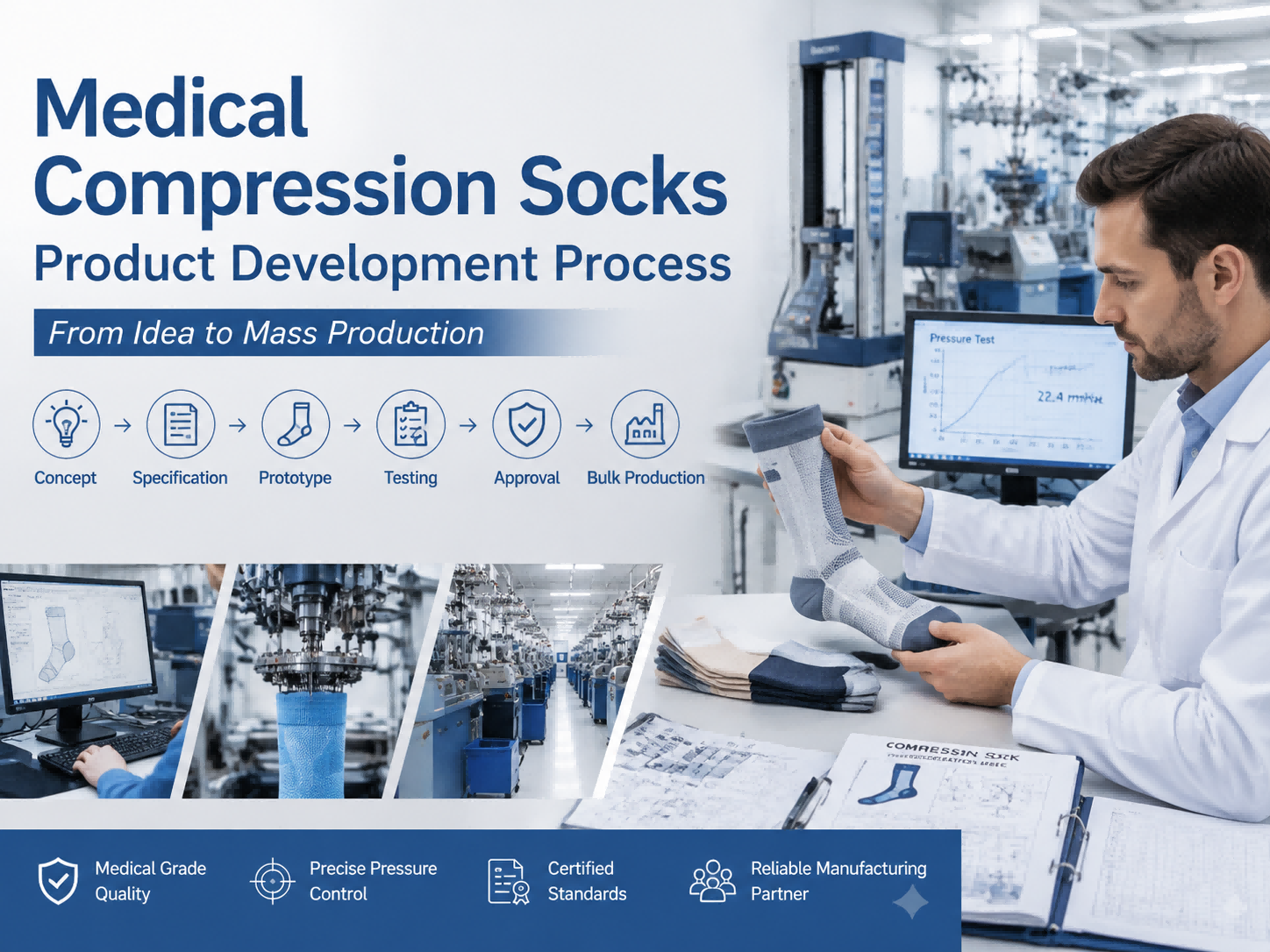
Medical Compression Socks Product Development Process
Related Article