How Compression Socks Manufacturers Ensure Pressure Accuracy

Why Pressure Control Matters for Professional Compression Sock Buyers
For medical compression socks, pressure accuracy is not just a product specification — it directly affects product performance, user safety, and market compliance.
For brands, distributors, and healthcare suppliers, choosing a compression socks manufacturer with reliable pressure control capability is essential. A professional manufacturer should have the right knitting technology, testing equipment, and quality control process to ensure every pair delivers consistent compression performance.
1. Understanding Graduated Compression Principle
Medical compression socks are designed based on graduated compression technology.
Unlike regular socks, compression socks apply the highest pressure around the ankle and gradually reduce pressure toward the calf or thigh.
Typical pressure distribution:
- Ankle area: Maximum compression
- Calf area: Reduced pressure
- Upper leg area: Lower compression
This pressure gradient helps support venous circulation and is the key difference between medical compression socks and ordinary support socks.
For professional buyers, the pressure gradient consistency across different sizes is one of the most important indicators when evaluating a supplier.
2. Why Ankle Pressure Is the Critical Standard
The ankle is the starting point of compression therapy.
For example:
- 15-20 mmHg
- 20-30 mmHg
- 30-40 mmHg
The pressure classification is mainly determined by the compression level at the ankle.
A reliable manufacturer must control:
- Yarn selection and elasticity
- Knitting structure
- Stitch density
- Machine settings
- Size grading
Small variations in these factors can affect final pressure performance.
Experienced compression sock factories use precise production parameters to maintain consistent ankle pressure between production batches.
3. Pressure Measurement Equipment in Manufacturing
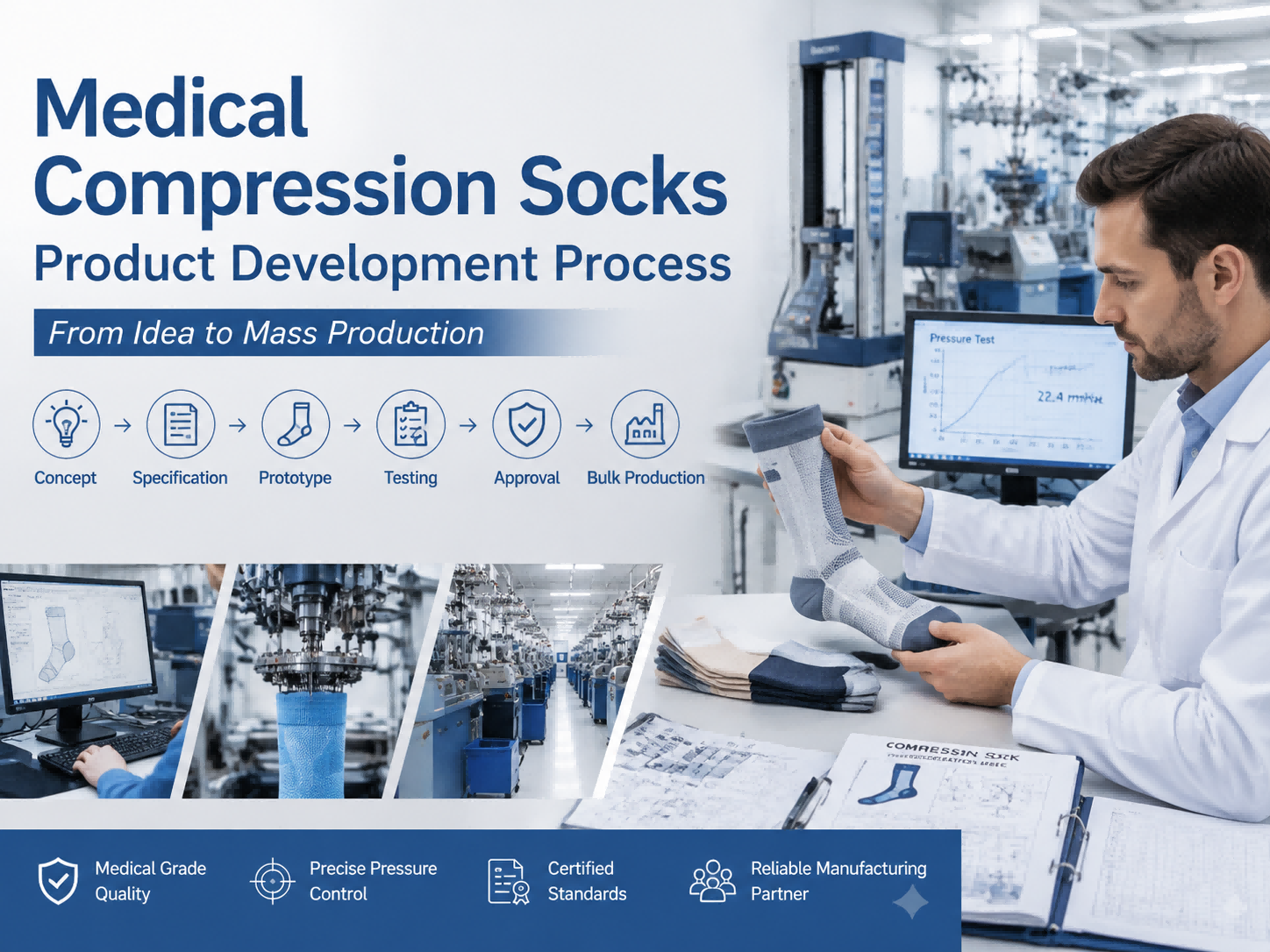
Professional compression sock manufacturers do not rely only on knitting settings. Finished products should be tested using specialized pressure measurement equipment.
Common testing methods include:
Pressure Testing Machine
A compression testing system measures the actual pressure applied by the sock at different points:
- Ankle
- Calf
- Upper leg
The results verify whether the product meets the required compression class.
MST MK V Compression Testing System
The MST MK V pressure testing system is widely recognized in the compression hosiery industry for evaluating pressure performance.
It helps manufacturers check:
- Compression level accuracy
- Pressure distribution
- Product consistency
- Batch-to-batch stability
For medical compression products, testing equipment provides objective data instead of relying only on manufacturing experience.
4. Meeting RAL-GZ 387 Compression Standards
For European medical compression markets, RAL-GZ 387 is one of the most recognized quality standards for medical compression stockings.
The standard defines requirements for:
- Compression classes
- Pressure measurement methods
- Pressure tolerance
- Product labeling
- Size specifications
Manufacturers supplying professional medical markets need to understand these requirements and control production accordingly.
A qualified supplier should have:
✓ Standardized knitting processes
✓ Pressure testing capability
✓ Quality inspection procedures
✓ Traceable production records
This is especially important for European distributors and medical brands requiring reliable long-term supply.
5. How Manufacturers Control Pressure During Production
Pressure accuracy depends on multiple manufacturing factors:
Yarn Selection
Different yarn compositions influence:
- Elastic recovery
- Durability
- Wearing comfort
- Pressure stability
Common materials include:
- Nylon microfiber
- Lycra® elastane
- High-performance elastic yarns
Knitting Technology
Advanced knitting machines allow manufacturers to control:
- Stitch density
- Compression zones
- Size grading
- Pressure distribution
Medical compression socks require much more precise knitting compared with standard hosiery.
Quality Inspection
A professional factory should inspect:
- Raw material elasticity
- Finished product dimensions
- Compression pressure
- Appearance defects
- Packing accuracy
Random pressure testing during production helps prevent inconsistent batches.
Why Choosing an Experienced Compression Socks Manufacturer Matters
For B2B buyers, pressure accuracy directly impacts:
- Product reputation
- Customer satisfaction
- Medical market approval
- Repeat orders
A reliable compression socks supplier should provide more than competitive pricing. They should have:
- Professional compression knitting technology
- Medical product manufacturing experience
- Pressure testing capability
- Knowledge of international standards
When developing private label or OEM compression socks, working with a manufacturer that understands pressure control can significantly reduce quality risks and ensure stable market performance.
How to Build a Compression Socks Brand in 2026
Medical Compression Socks vs Regular Compression Socks: What Buyers Need to Know
Related Article