Why Compression Socks Fail Quality Checks

Common Problems That Cause Returns and Failed Inspections
When importing compression socks, many buyers focus on price, lead time, and appearance.
However, the biggest problems usually appear after production:
- Failed quality inspection
- Customer complaints
- High return rates
- Loss of market reputation
From our experience working with global buyers, most quality issues are not caused by one single factor. They usually come from problems in materials, production control, or testing standards.
Understanding these risks before placing an order can help buyers choose the right manufacturing partner.
1. Inconsistent Compression Pressure
Compression accuracy is the most important quality factor for medical compression socks.
A common problem is:
- One batch feels tighter than another
- Different sizes have inconsistent pressure
- Actual mmHg does not match the specification
For example, a buyer orders 20–30 mmHg compression socks, but some products do not reach the expected compression level.
Why does this happen?
Possible reasons include:
- Incorrect knitting parameters
- Unstable yarn elasticity
- Lack of compression testing
- Poor production control
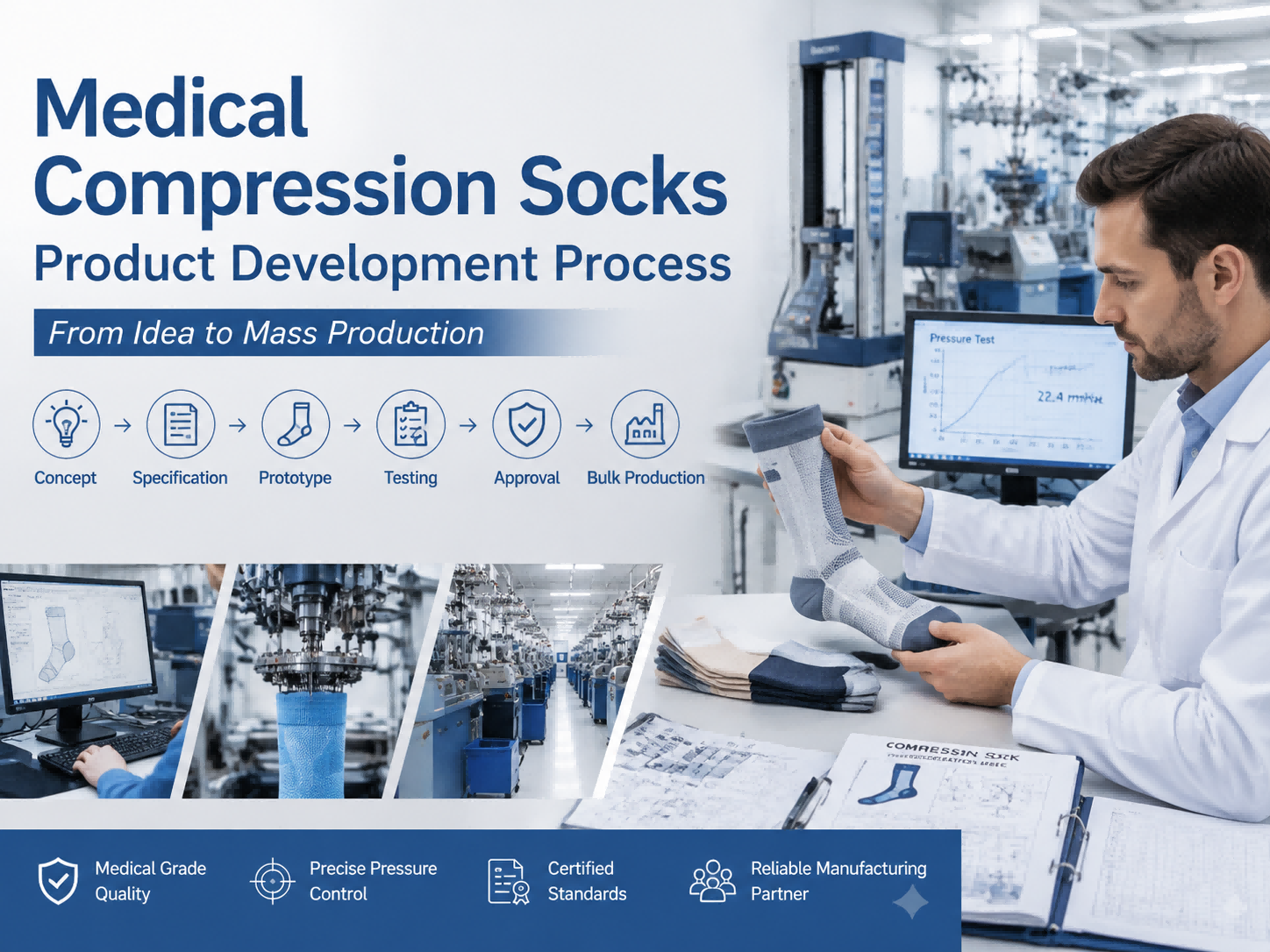
A professional compression socks factory should verify pressure consistency during production, not only check appearance.
2. Wrong Size and Poor Fit
Sizing problems are one of the most common reasons for returns.
Typical complaints include:
- Socks are too tight
- Socks slide down during use
- Heel position is incorrect
- Length does not match size chart
Compression socks require accurate size grading because the pressure distribution depends on the relationship between:
- Leg circumference
- Sock length
- Elastic recovery
A small size deviation can affect wearing experience.
3. Uneven Compression Distribution
Compression socks are different from ordinary socks.
The pressure should gradually decrease from the ankle upward.
Poor production control may cause:
- Excessive pressure at the top band
- Weak compression around the ankle
- Uneven pressure zones
This can lead to discomfort and customer complaints.
4. Material Quality Problems
Material selection directly affects product performance.
Common issues include:
Low elasticity recovery
The sock becomes loose after repeated washing.
Poor durability
Yarn breaks or fabric becomes thinner after use.
Uncomfortable feeling
Some materials may cause:
- Skin irritation
- Excessive heat
- Poor breathability
For medical compression socks, the yarn combination is not only about cost — it affects product lifetime and customer satisfaction.
5. Appearance Defects
Although compression performance is the priority, appearance still affects inspection results.
Common defects include:
- Loose threads
- Uneven knitting
- Color differences
- Stains during production
- Packaging mistakes
For retail and pharmacy channels, visual quality directly impacts brand image.
6. Incorrect Labeling and Packaging
Many inspection failures happen because of documentation or packaging mistakes.
Examples:
- Wrong size label
- Incorrect compression level marking
- Missing care instructions
- Wrong barcode
- Packaging not matching approved samples
These issues can delay shipment even when the product itself is acceptable.
7. Lack of Production Testing
One major difference between experienced manufacturers and general sock factories is the quality control process.
A reliable compression socks factory should check:
✔ Raw material quality
✔ Knitting process
✔ Size accuracy
✔ Compression performance
✔ Final appearance
✔ Packaging accuracy
Quality should be controlled throughout production, not only inspected at the end.
How to Reduce Quality Risks Before Ordering
For buyers, we recommend:
1. Confirm specifications clearly
Including:
- Compression level
- Size chart
- Materials
- Color
- Packaging requirements
2. Test samples carefully
Do not only check appearance.
Evaluate:
- Wearing comfort
- Compression feeling
- Size accuracy
- Washing durability
3. Choose a factory with medical production experience
Compression socks require specialized equipment and production knowledge.
A factory that only makes regular socks may not understand medical compression requirements.
Final Thoughts
Quality inspection failures are usually not caused by one small mistake.
They are the result of:
- Poor material control
- Unstable production process
- Lack of compression testing
- Weak quality management
For medical compression socks, choosing the right manufacturing partner is more important than simply choosing the lowest price.
Looking for a Reliable Compression Socks Manufacturer?
We help global brands and distributors reduce quality risks through:
- Professional compression sock production
- Compression testing process
- OEM & ODM support
- Stable quality control system
- Private label solutions
How Compression Socks Are Made Factory Guide
Compression Socks Certification Guide
Related Article