What Materials Are Best for Medical Compression Socks
A Buyer’s Guide to Choosing the Right Materials for Performance, Comfort, and Market Success
When sourcing medical compression socks, many buyers focus on compression levels, certifications, and pricing. However, one critical factor is often overlooked: material selection.
The materials used in compression socks directly affect:
- Compression performance
- Durability
- Comfort
- Breathability
- Moisture management
- Antibacterial properties
- Customer satisfaction
For brands, distributors, pharmacies, and healthcare companies, choosing the right material combination can significantly influence product quality and market positioning.
In this guide, we’ll explore the most commonly used materials in medical compression socks and help you determine which option best suits your target market.
Why Material Selection Matters
Unlike regular socks, medical compression socks are designed to provide graduated pressure over extended periods of wear.
Patients may wear them for:
- Varicose vein management
- Edema prevention
- Deep vein thrombosis (DVT) prevention
- Post-surgical recovery
- Pregnancy support
- Long-distance travel
Because they are worn for many hours each day, the material composition plays a crucial role in both performance and user comfort.
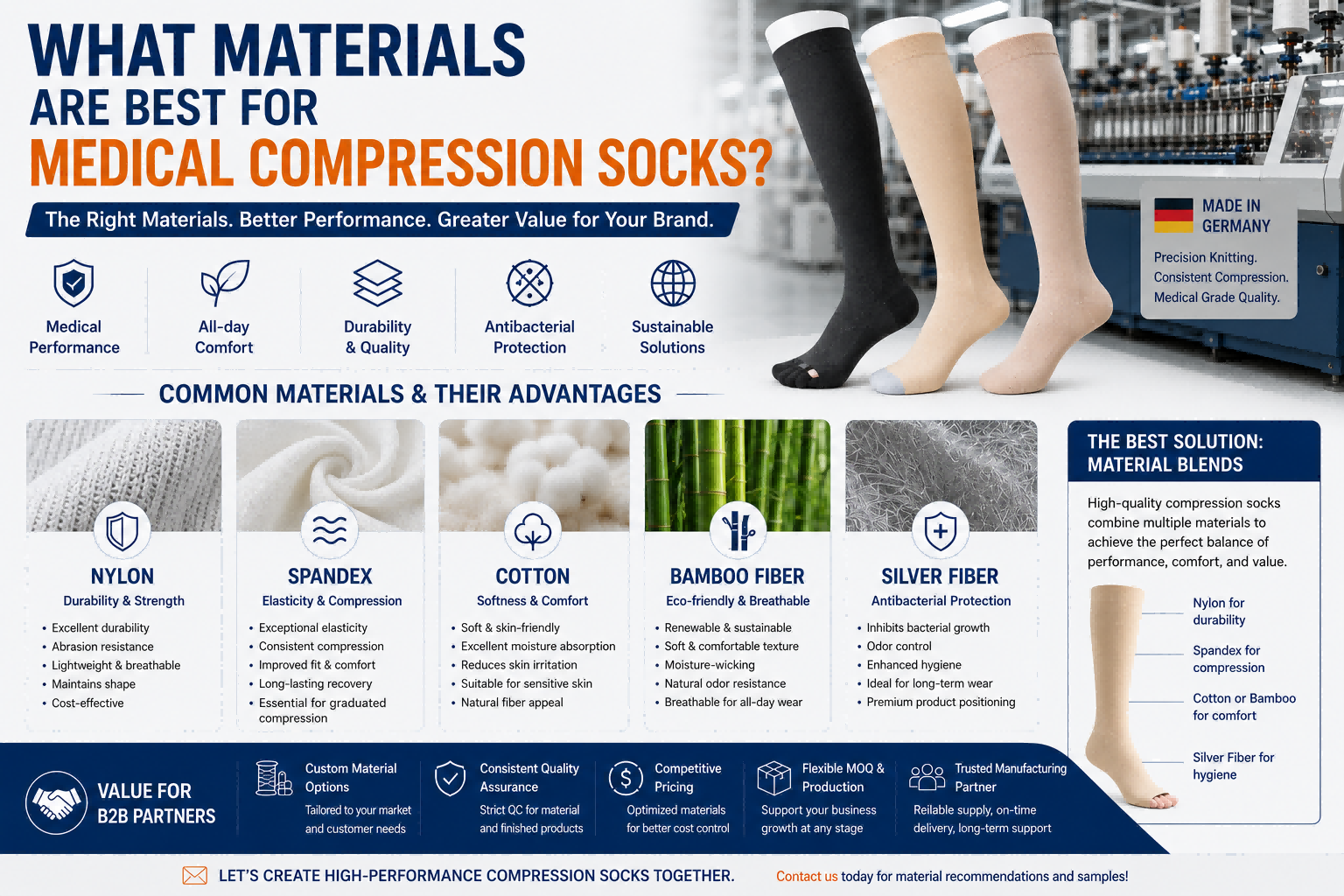
1. Nylon: The Foundation of Most Compression Socks
Nylon is one of the most widely used materials in medical compression products.
Advantages
✔ Excellent durability
✔ Strong abrasion resistance
✔ Lightweight and breathable
✔ Maintains shape after repeated washing
✔ Cost-effective for large-scale production
Best Applications
Nylon is ideal for:
- Daily medical compression socks
- Retail compression products
- Long-term use products
- High-volume wholesale programs
For most manufacturers, nylon serves as the primary structural material that provides strength and durability.
2. Spandex: The Key to Compression Performance
If nylon provides structure, spandex provides compression.
Also known as elastane, spandex is responsible for the stretch and recovery characteristics that create graduated pressure.
Advantages
✔ Exceptional elasticity
✔ Consistent compression performance
✔ Improved fit and comfort
✔ Long-lasting stretch recovery
✔ Essential for medical-grade compression
Best Applications
Spandex is used in virtually all compression sock categories, including:
- 15–20 mmHg compression socks
- 20–30 mmHg medical-grade products
- 30–40 mmHg therapeutic compression socks
Without high-quality spandex, compression accuracy becomes difficult to maintain.
3. Cotton: Comfort and Skin-Friendly Performance
Cotton remains popular among consumers who prioritize comfort.
Advantages
✔ Soft and comfortable feel
✔ Excellent moisture absorption
✔ Reduced skin irritation
✔ Suitable for sensitive skin
✔ Natural fiber appeal
Limitations
Cotton absorbs moisture well but dries more slowly than synthetic materials.
As a result, it is often blended with nylon and spandex rather than used alone.
Best Applications
Cotton-blend compression socks are commonly chosen for:
- Everyday wear
- Elderly users
- Sensitive skin markets
- Pharmacy retail products
4. Bamboo Fiber: A Growing Choice for Eco-Conscious Brands
As sustainability becomes increasingly important, bamboo fiber has gained popularity in compression sock manufacturing.
Advantages
✔ Eco-friendly and renewable
✔ Soft and comfortable texture
✔ Excellent moisture management
✔ Natural odor resistance
✔ Breathable for all-day wear
Best Applications
Bamboo fiber is particularly attractive for:
- Premium wellness brands
- Sustainable product lines
- Direct-to-consumer brands
- Lifestyle compression socks
For brands targeting environmentally conscious consumers, bamboo can be a valuable marketing advantage.
5. Silver Fiber: Premium Antibacterial Protection
Silver fiber is considered one of the most advanced materials used in medical compression products.
Silver ions help inhibit bacterial growth and reduce unpleasant odors.
Advantages
✔ Antibacterial protection
✔ Odor control
✔ Enhanced hygiene
✔ Suitable for long-term wear
✔ Premium product positioning
Best Applications
Silver fiber is commonly used in:
- Medical-grade compression socks
- Diabetic socks
- Post-surgical recovery products
- Healthcare and clinical applications
Because of its added functionality, silver fiber is often featured in premium product lines.
Which Material Is Best?
The truth is that there is no single “best” material.
The ideal choice depends on your target market and product positioning.
|
Material |
Main Advantage |
Best For |
|
Nylon |
Durability |
High-volume medical products |
|
Spandex |
Compression Performance |
All compression socks |
|
Cotton |
Comfort |
Daily wear & sensitive skin |
|
Bamboo Fiber |
Sustainability |
Premium & eco-friendly brands |
|
Silver Fiber |
Antibacterial Protection |
Medical and diabetic products |
The Best Solution: Material Blends
Most high-quality medical compression socks combine multiple materials rather than relying on a single fiber.
A typical premium construction may include:
- Nylon for durability
- Spandex for compression
- Cotton or Bamboo for comfort
- Silver Fiber for hygiene
This approach allows manufacturers to balance performance, comfort, and cost.
Tips for B2B Buyers
When evaluating compression sock manufacturers, ask:
What material options do you offer?
Different suppliers specialize in different yarn technologies.
Can materials be customized?
OEM and private-label projects often require specific material blends.
How do materials affect pricing?
Premium fibers can improve performance but may increase production costs.
Can you provide material testing reports?
Reliable manufacturers should be able to verify fiber composition and product performance.
Final Thoughts
The success of a medical compression sock depends on more than just compression levels. Material selection has a direct impact on comfort, durability, hygiene, and customer satisfaction.
For most brands, the best approach is to work with an experienced manufacturer that can recommend the right material blend based on your market positioning, performance requirements, and budget.
By choosing the right materials, you can create products that not only meet medical standards but also deliver a better user experience and stronger brand value.
Looking for a Reliable Compression Socks Manufacturer?
We help brands, distributors, and healthcare companies develop high-quality compression socks using customized material blends tailored to specific market needs.
Our capabilities include:
- Medical-grade compression socks
- OEM & ODM manufacturing
- Custom material development
- Private label solutions
- Flexible MOQ options
- Strict quality control standards
Contact us today to discuss your project and request product samples.
What Certifications Should Compression Socks Manufacturers Have
Top Compression Socks Market Trends in 2026
Related Article