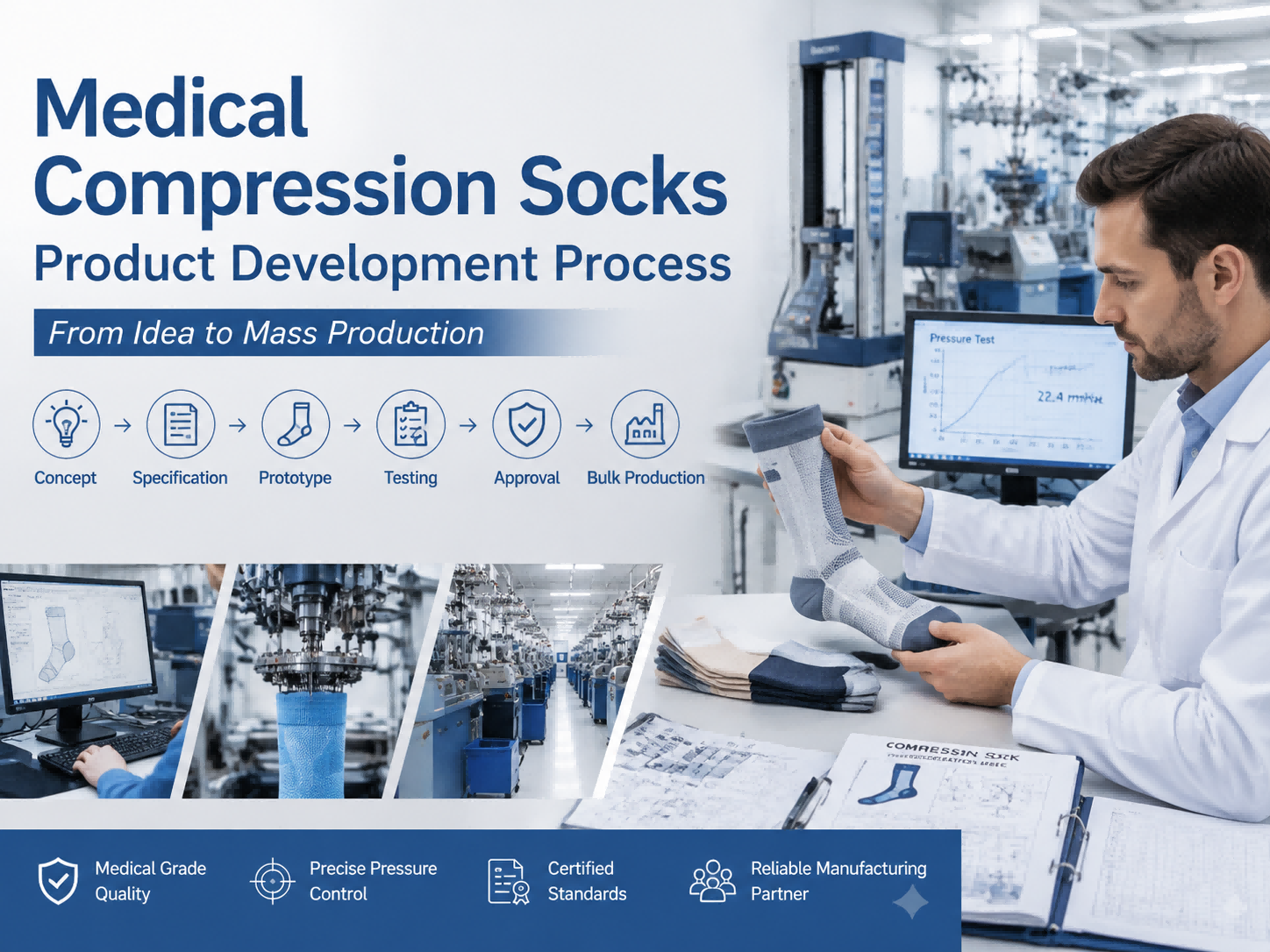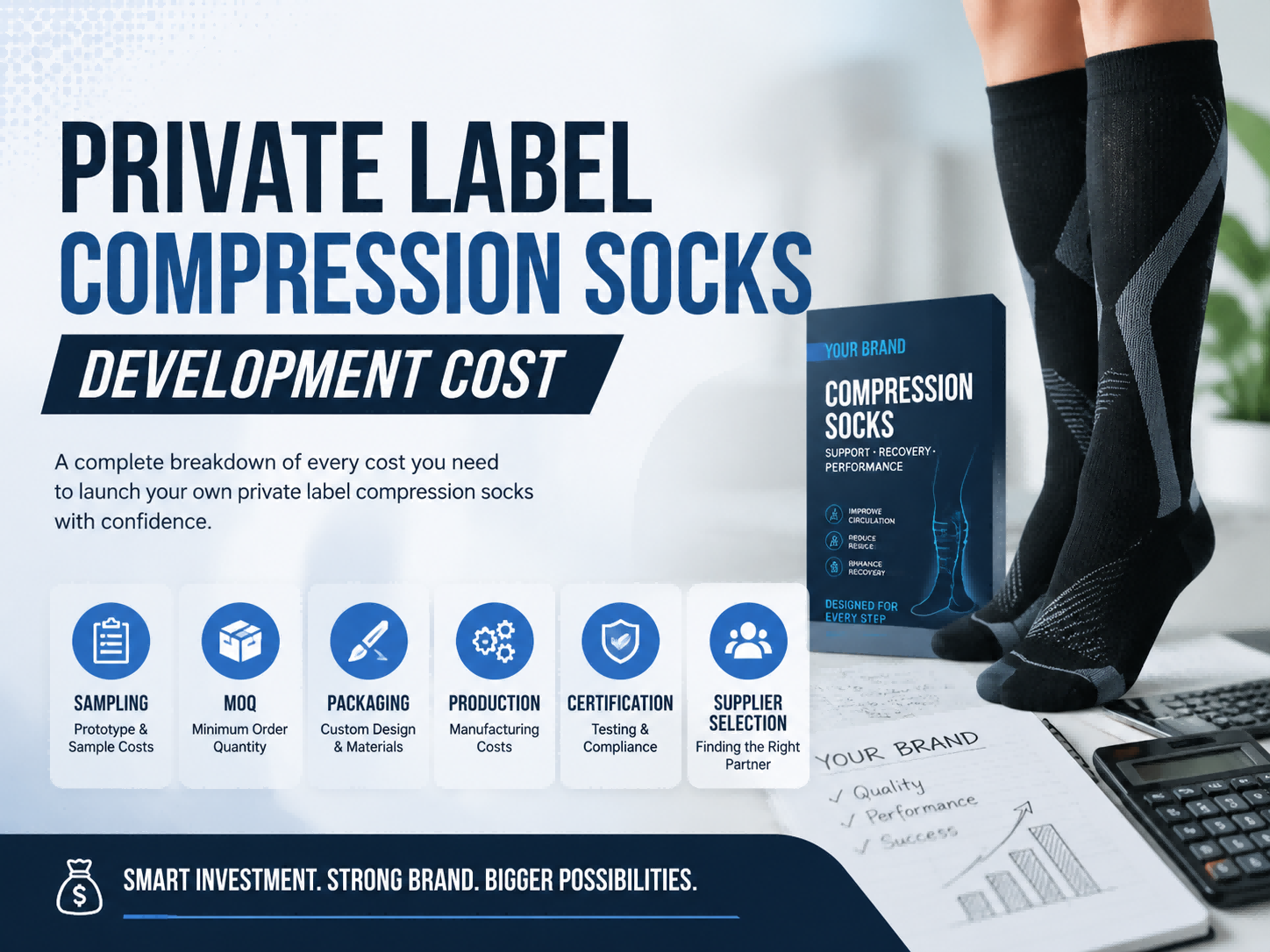
What Makes a Good Compression Socks Supplier

7 Things Brands Should Look for Before Choosing a Manufacturer
Finding a compression socks supplier is easy.
Finding a supplier that can support your brand for years is much harder.
Many buyers start by comparing prices, but a reliable supplier is not simply the one with the lowest quotation. For compression socks, production experience, quality control, and communication often have a bigger impact on the final result.
A good supplier should help you reduce risks, improve product quality, and build a stable supply chain.
Here are the key factors to consider.
1. Real Experience in Compression Socks Manufacturing
Compression socks are not ordinary socks.
The production process involves:
- Pressure control
- Elastic material management
- Size grading
- Specialized knitting techniques
A supplier with experience in regular hosiery may not fully understand the requirements of compression products.
A reliable manufacturer should be able to explain:
- Different compression levels
- Suitable materials for different markets
- How to maintain pressure consistency
Experience is especially important for medical and healthcare customers.
2. Stable Production Capability
A good supplier should have more than just production equipment.
They need a stable manufacturing system.
Check:
- Production capacity
- Machine condition
- Skilled operators
- Production planning process
A supplier that accepts more orders than they can handle may offer a good price but create problems later:
- Delayed delivery
- Inconsistent quality
- Poor communication
Reliable capacity is more important than short-term speed.
3. Strong Quality Control System
For compression socks, quality problems can directly affect customer satisfaction.
A professional factory should control quality throughout the production process:
Before Production
- Material inspection
- Yarn confirmation
- Sample approval
During Production
- Knitting inspection
- Size checking
- Appearance control
Before Shipment
- Final inspection
- Packaging check
- Product quantity confirmation
Quality should not only be checked at the end. It needs to be managed from the beginning.
4. Understanding of Compression Performance
One of the biggest differences between a normal sock supplier and a compression socks supplier is technical knowledge.
A professional supplier should understand:
- 15–20 mmHg
- 20–30 mmHg
- 30–40 mmHg
Different pressure levels require different production settings.
The supplier should also have methods to check:
- Compression consistency
- Elastic recovery
- Product fitting
For healthcare-related products, performance matters as much as appearance.
5. OEM and Private Label Support
Many brands are not looking for a simple product reseller.
They want a manufacturing partner who can help develop their own products.
A capable supplier should support:
- Custom designs
- Logo customization
- Packaging solutions
- Material selection
- Size customization
For growing brands, OEM capability creates more opportunities to build market differentiation.
6. Clear Communication and Problem Solving
Manufacturing always involves unexpected situations.
For example:
- Material delays
- Sample adjustments
- Packaging changes
- Production issues
The difference between an average supplier and a good supplier is how they handle problems.
A reliable partner should:
- Communicate early
- Provide solutions
- Keep buyers updated
Good communication reduces unnecessary delays and misunderstandings.
7. Certifications and Compliance Awareness
For medical and healthcare markets, compliance is an important part of supplier evaluation.
Depending on the target market, buyers may check:
- ISO 13485
- CE MDR
- FDA requirements
- OEKO-TEX®
However, certifications alone are not enough.
A good supplier should also understand how these requirements affect:
- Production
- Documentation
- Quality management
Price Is Important, But It Is Not Everything
A lower quotation may look attractive at the beginning.
But hidden costs can appear later:
- Quality problems
- Rework
- Delayed shipments
- Customer complaints
The right supplier should provide the best overall value:
Stable quality + Reliable delivery + Professional support
Final Thoughts
A good compression socks supplier is not only a factory that produces products.
They are a partner who understands your market, supports product development, and helps your brand grow.
Before choosing a supplier, look beyond the price.
Evaluate their:
✓ Manufacturing experience
✓ Quality system
✓ Production capability
✓ Technical knowledge
✓ OEM support
✓ Communication ability
Choosing the right partner at the beginning can save significant time and cost in the future.
How Medical Brands Develop Private Label Compression Socks
OEM vs Ready-Made Compression Socks
Related Article