
Top Compression Socks Market Trends in 2026
author: Carol
2026-06-22

In 2026, the global medical socks and compression socks market is undergoing profound structural changes. According to the latest industry data, the global market size for pressure therapy socks reached approximately $4.6 billion in 2026 and maintains steady growth.
For B2B brands, medical device traders, and large cross-border e-commerce sellers, this category, previously considered "traditional medical consumables," is rapidly transforming towards functionality, everyday use, and environmental friendliness.
How can companies gain a competitive edge in the fierce supply chain competition? Below are five key market trends to watch in 2026 and corresponding B2B strategies.
For B2B brands, medical device traders, and large cross-border e-commerce sellers, this category, previously considered "traditional medical consumables," is rapidly transforming towards functionality, everyday use, and environmental friendliness.
How can companies gain a competitive edge in the fierce supply chain competition? Below are five key market trends to watch in 2026 and corresponding B2B strategies.
Trend 1: Explosive growth in demand for sports recovery
--From "patient medication consumables" to "everyone's daily life"
Compression stockings are completely shedding the stereotype that they are "only for people with varicose veins." In 2026, the demand from athletes for post-exercise muscle recovery and reducing lactic acid buildup will explode.
- Market Insights: The acceptance of compression socks among a wide range of sports enthusiasts, including runners, trail runners, and weightlifters, has reached new heights. Lightweight, stylish, and highly elastic "sports recovery socks" are becoming the core engine of sales growth.
- B2B product selection recommendations: Focus on production lines with graded compression technology (e.g., maximum pressure at the ankle, decreasing upwards). In terms of design, completely abandon the traditional "flesh/black" medical look and instead adopt high-saturation colors, reflective strips, and other sporty, functional designs.
Trend 2: Expanding Demand for Diabetes Care
--The ticket to sophisticated medical-grade protection
With the global aging population and the continued rise in the incidence of chronic diseases such as obesity and diabetes, compression stockings for foot care of diabetic patients have shown strong counter-cyclical essential attributes.
- Market Insight: Diabetic patients often suffer from peripheral neuropathy or lower limb edema, which places extremely high demands on compression stockings—they must promote blood circulation without chafing the skin.
- B2B supply chain upgrade:
- Seamless: The toe of the sock must be absolutely seamless to prevent friction from causing foot ulcers.
- Cushioning technology: Specific Terry Cushioning is added to the soles and ankles.
- Antibacterial and anti-mildew: A silver or copper ion fabric coating is a must to provide long-lasting antibacterial and odor-controlling functions.
Trend 3: Sustainable Materials Become a Hard Currency
--ESG compliance as a "stepping stone" to overseas markets
Driven by global carbon neutrality and ESG (Environmental, Social and Governance) policies, in 2026, overseas buyers (especially in the European and American markets) have made mandatory or priority requirements for environmentally friendly materials when placing orders.
- Market Insights: Traditional compression stockings heavily rely on petroleum-based synthetic fibers such as Nylon and Spandex. However, this year, the application of recycled nylon (such as Econyl), bio-based spandex, and organic cotton/bamboo fiber blends in compression stockings has matured.
- B2B sourcing strategy: Prioritize source factories certified by GRS (Global Recycling Standard) or OEKO-TEX Standard 100. This not only helps brands establish a differentiated premium based on "green and environmentally friendly" pricing, but is also key to circumventing green tariff barriers in Europe and the United States.
Trend 4: The rapid rise and omnichannel penetration of DTC brands
--Supply chain responsiveness faces a major test
The surge in internet-native DTC (direct-to-consumer) brands has profoundly changed the monetization path of compression socks and, in turn, placed new efficiency demands on B-end factories.
The transformation dividends of B2B factories:
Small order volume and rapid response (flexible supply chain) have become core competitiveness.
The traditional large-order model, which used to require a minimum order of 3,000 pairs, is being replaced by a more flexible model with a minimum order of 500 pairs and a 7-day restocking period. Supply chain companies that can provide mature private label customization and dropshipping support will gain more high-quality new customers in 2026.
Trend 5: Digital Customization Trend
--From "one size fits all" to "tailor-made" clothing
In 2026, the combination of textile technology and digital tools enabled the "precision customization" of compression socks to overcome the cost barrier.
- Market Insight: The traditional S/M/L three-size system often leads to nearly 30% of users abandoning wearing products due to "size mismatch and discomfort from pressure." Now, a model that uses 3D scanning of foot data via mobile phone and then produces products on demand through digital knitting/intelligent flat knitting machines is beginning to emerge.
- B2B strategy: As a supplier, you should actively develop intelligent nesting and digital design (CAD) capabilities. Offering "semi-custom" services, such as supporting customers with logo customization, personalized stitching, and even minor size adjustments, will be an excellent way to avoid price wars and increase average order value.
In conclusion, the compression sock market in 2026 is no longer simply a "medical infighting frenzy," but a multi-billion dollar blue ocean market spanning healthcare, sports, and lifestyle. Mastering a "green and sustainable" and "flexible customization" supply chain is key to winning in this round of reshuffling.
Contact us now for more information.
What Materials Are Best for Medical Compression Socks
OEM vs ODM Compression Socks: Which Is Better for Your Brand?
Related Article

Learn what medical brands need to know before launching compression stockings, including compression classes, product types, knee high, thigh high, pantyhose, open toe and closed toe options.
What Medical Brands Should Know Before Launching Compression Stockings
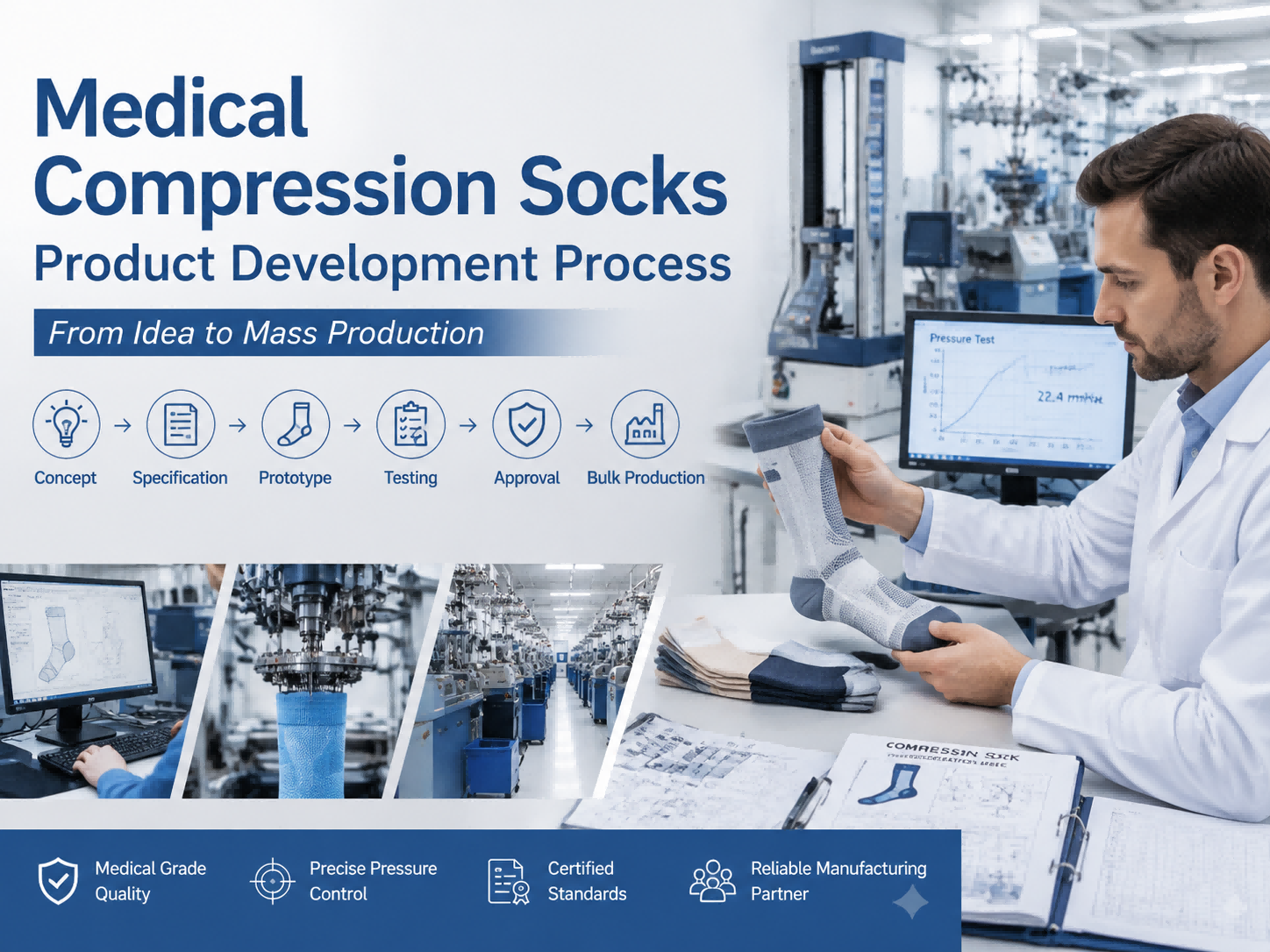
Learn how medical compression socks are developed from concept to mass production. This guide explains each step, including specification design, prototype development, testing, approval, and manufacturing for healthcare companies and medical brands.
Medical Compression Socks Product Development Process
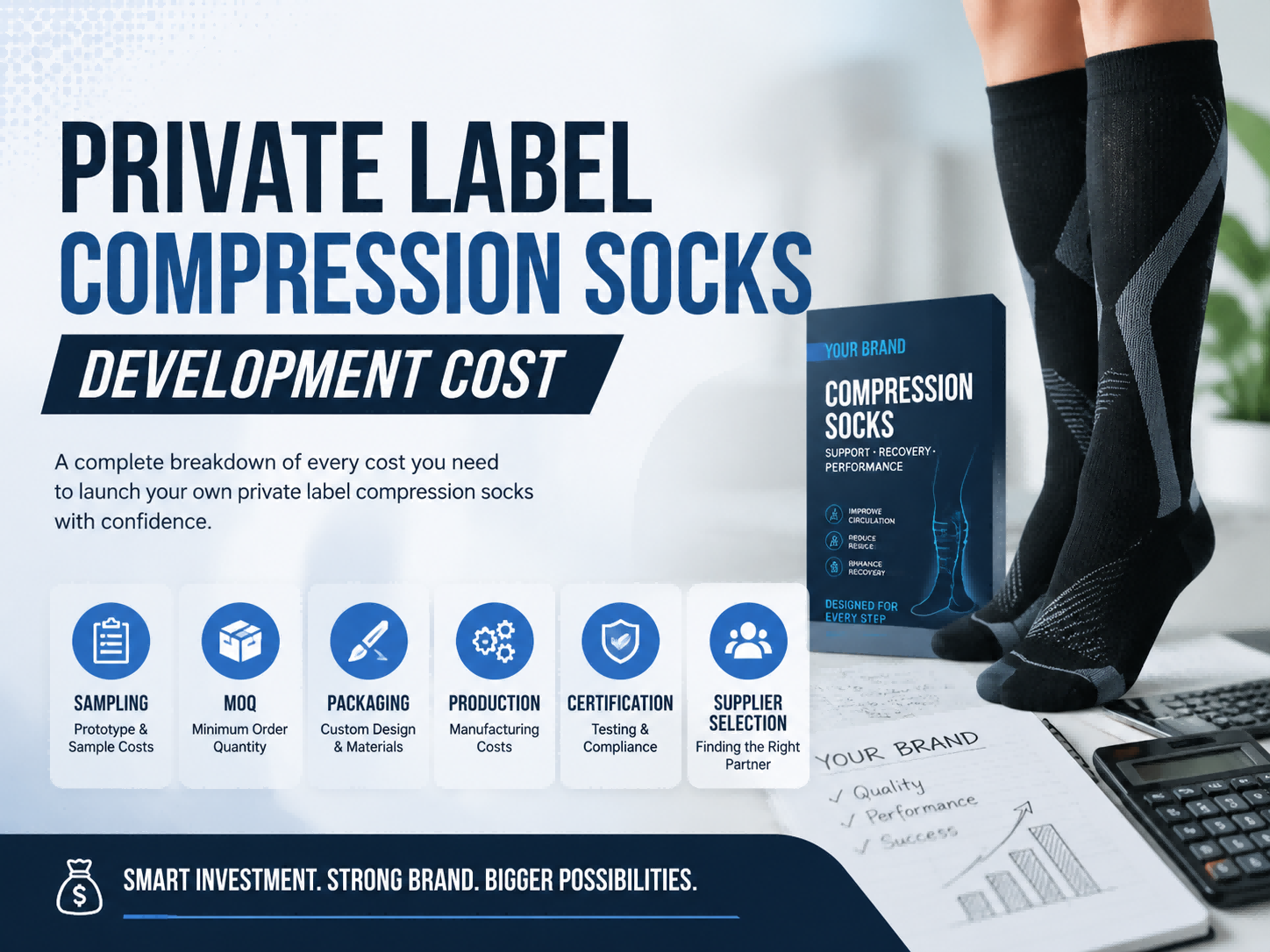
Learn how much it costs to develop private label compression socks, including sampling, MOQ, packaging, production, certification, and supplier selection.
Private Label Compression Socks Development Cost

Starting a compression socks brand requires more than selecting a product. This guide covers the key steps from market research and product selection to supplier sourcing, sampling, branding, and launch preparation. Learn how Amazon sellers, distributors, and healthcare startups can build a reliable compression socks business with the right manufacturing partner and product strategy.
How to Build a Compression Socks Brand in 2026