
Stress Awareness Compression Hosiery B2B Growth
author: Carol
2026-04-20
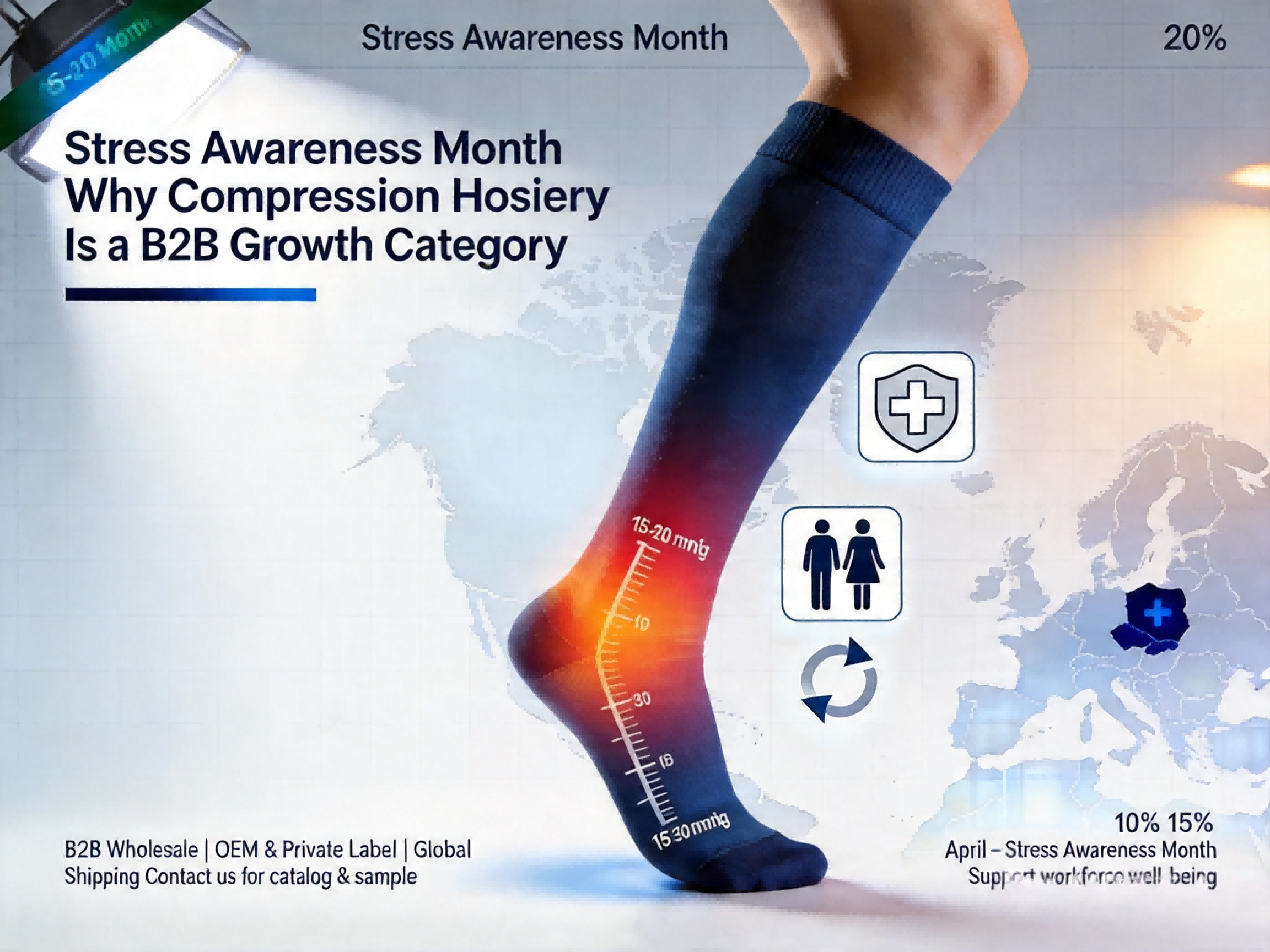
April is Stress Awareness Month, designed to highlight the interplay between physical and mental well-being in the workplace. This presents an excellent opportunity for B2B buyers in sectors such as medical supplies, corporate health, and retail pharmacies to assess the growing category of medical compression stockings.
Strong Market Momentum
The data powerfully supports this. Global revenue for medical compression stockings reached $272 million in 2025 and is projected to reach $411 million by 2032, representing a CAGR of 6.2%. Europe holds over 35% of the global market share, solidifying its position as the largest regional market for pressure therapy.
Clinically Validated.
Pressure therapy is a proven non-invasive intervention used to treat chronic venous insufficiency, reduce venous hypertension, and promote wound healing. The UK National Health Service (NHS) guidelines recommend changing stockings every 3–6 months and prescribing two pairs per patient—a continuous source of demand for distributors and retailers.
Occupational Health Needs.
A randomized controlled trial compared security personnel wearing regular socks with those wearing 15-20 mmHg or 20-30 mmHg compression socks. The results showed that compression socks significantly reduced calf muscle fatigue, swelling, and discomfort after prolonged standing. For B2B buyers serving hospitals, retail chains, airports, and corporate clients, this clinical evidence can be directly translated into a product value proposition.
B2B Service Capabilities
- Medical-grade progressive compression socks, covering different pressure levels
- OEM/private label, logo embroidery and customized packaging available
- Flexible minimum order quantities for market testing or bulk inventory
- Fast global delivery cycles
- The shift in workplace health concepts is strong, and your product portfolio should be updated accordingly.
WCID 2026 Compression Hosiery Innovation
World Heritage Day Leg Health and Daily Wellness
Related Article

Learn what medical brands need to know before launching compression stockings, including compression classes, product types, knee high, thigh high, pantyhose, open toe and closed toe options.
What Medical Brands Should Know Before Launching Compression Stockings
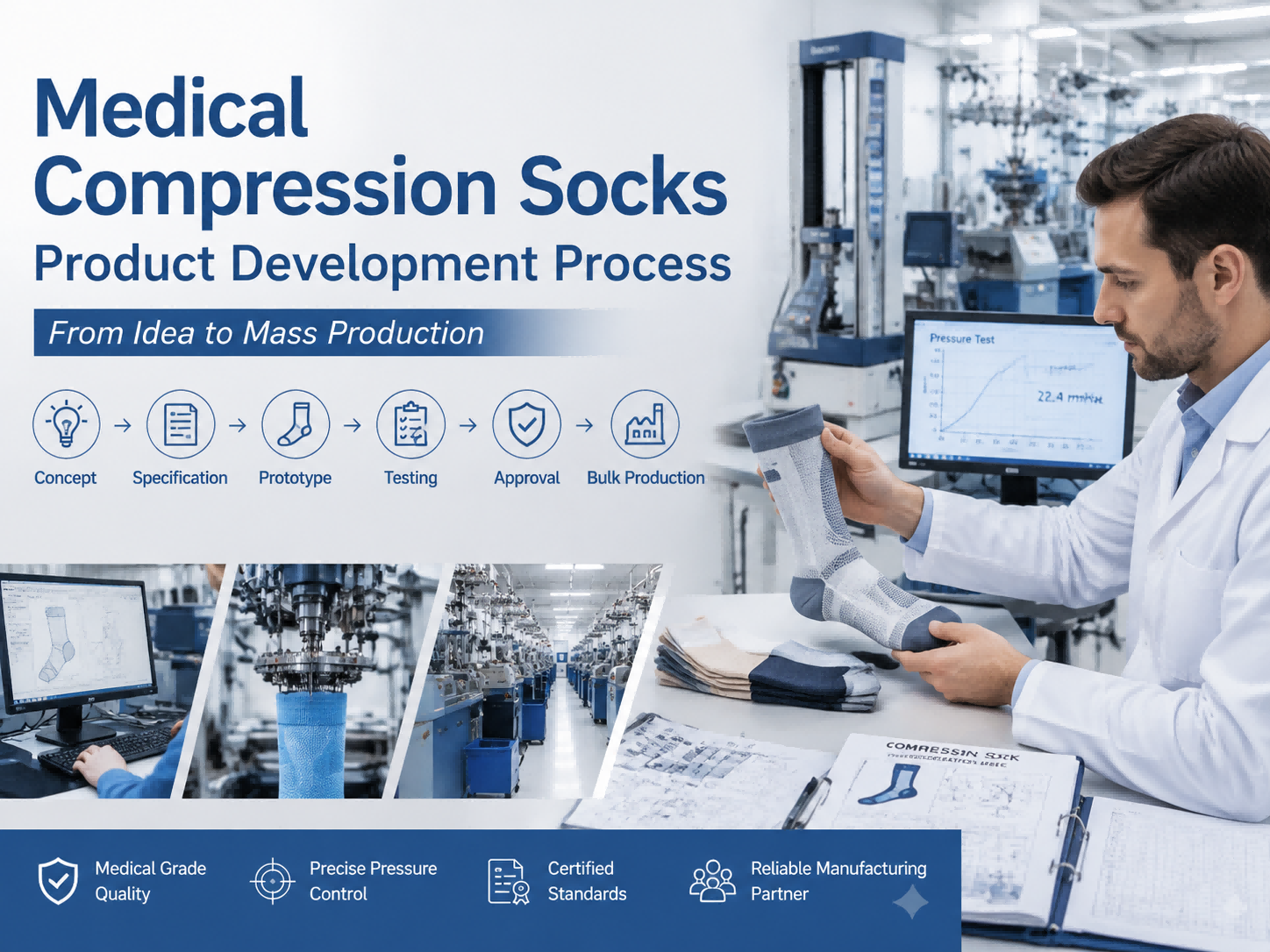
Learn how medical compression socks are developed from concept to mass production. This guide explains each step, including specification design, prototype development, testing, approval, and manufacturing for healthcare companies and medical brands.
Medical Compression Socks Product Development Process
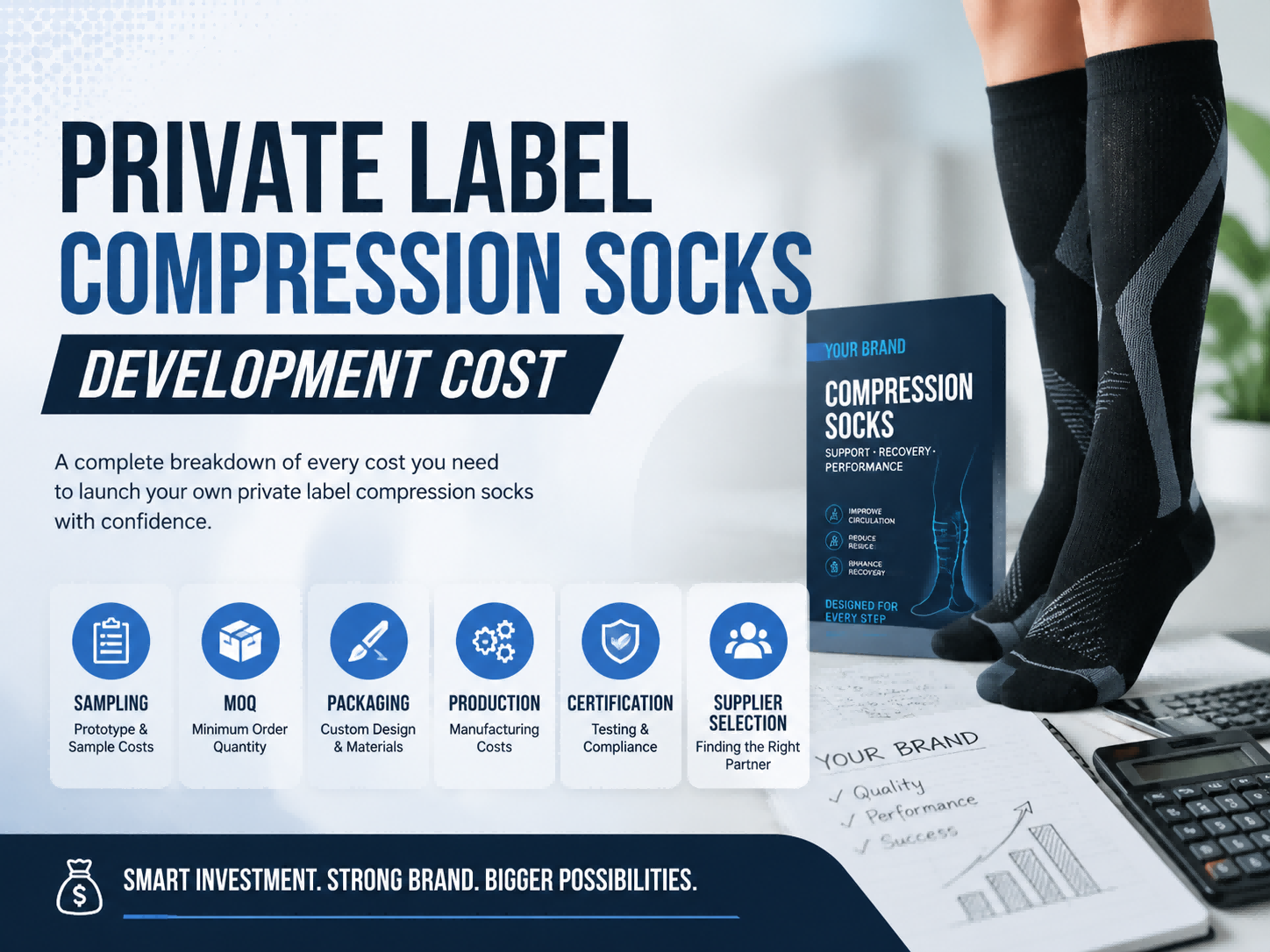
Learn how much it costs to develop private label compression socks, including sampling, MOQ, packaging, production, certification, and supplier selection.
Private Label Compression Socks Development Cost

Starting a compression socks brand requires more than selecting a product. This guide covers the key steps from market research and product selection to supplier sourcing, sampling, branding, and launch preparation. Learn how Amazon sellers, distributors, and healthcare startups can build a reliable compression socks business with the right manufacturing partner and product strategy.
How to Build a Compression Socks Brand in 2026