How to Import Compression Socks from China

China has become one of the leading manufacturing hubs for compression socks, supplying medical brands, healthcare distributors, pharmacies, and private label companies worldwide.
However, importing compression socks from China is not only about finding a factory with a competitive price. Buyers also need to understand product standards, supplier selection, quality control, shipping processes, and compliance requirements.
This guide explains the key steps to successfully import compression socks from China and avoid common sourcing problems.
1. Define Your Compression Socks Requirements Before Sourcing
Before contacting manufacturers, it is important to clearly define your product requirements.
Compression socks are not a simple textile product. Different markets and applications require different specifications, including:
Compression Level
Common compression levels include:
- 15-20 mmHg – Mild medical compression, commonly used for daily support and travel
- 20-30 mmHg – Moderate compression for medical applications
- 30-40 mmHg – Higher compression levels for specific clinical needs
The required compression level may depend on your target market regulations and customer expectations.
Product Type
Common imported compression sock categories include:
- Knee high compression socks
- Thigh high compression stockings
- Anti-embolism stockings
- Sports compression socks
- Medical compression sleeves
- Private label compression socks
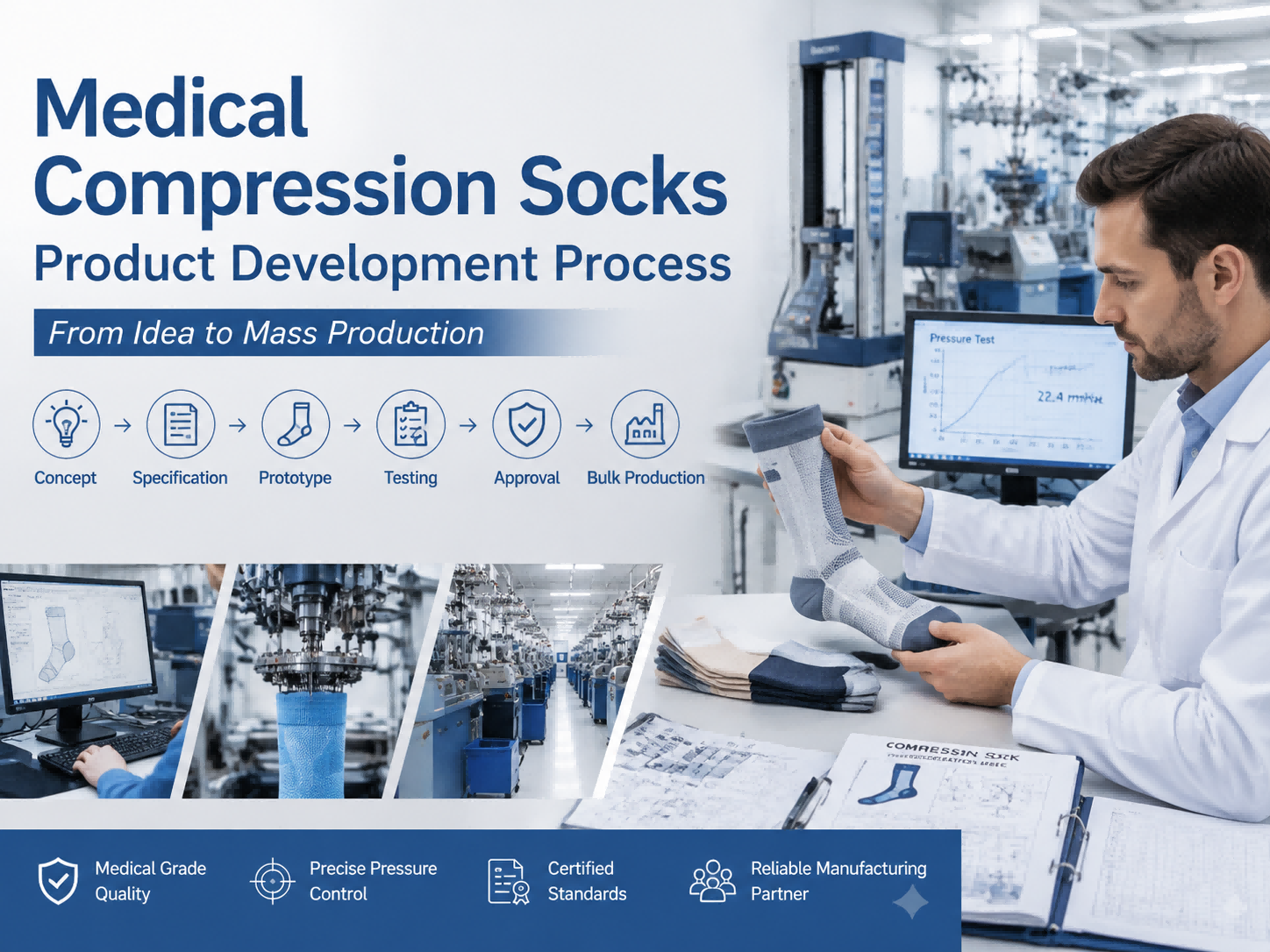
Different products require different knitting techniques, machines, and quality standards.
Material Selection
The material directly affects comfort, durability, and compression performance.
Common materials include:
- Nylon / Microfiber Nylon
- Lycra® Elastane
- Polyester
- Cotton blends
- Bamboo fiber
A professional manufacturer should help recommend the right yarn combination based on your market positioning.
2. Find the Right Compression Socks Manufacturer in China
Not every sock factory can produce medical-grade compression socks.
When evaluating suppliers, consider:
Manufacturing Experience
Ask:
- How many years have they produced compression products?
- Do they specialize in medical compression socks or general socks?
- Which countries do they export to?
Factories experienced in international markets usually understand different compliance requirements and packaging expectations.
Production Equipment
Compression performance depends heavily on knitting technology.
Professional compression sock manufacturers may use:
- Italian Lonati machines
- German knitting machines
- Medical-grade knitting equipment
Advanced equipment helps improve:
- Pressure accuracy
- Size consistency
- Product durability
- Wearing comfort
Certifications and Compliance
Depending on your target market, you may need suppliers with certifications such as:
- ISO 13485 Quality Management System
- CE MDR compliance support
- FDA registration support
- OEKO-TEX® certification
- BSCI social compliance
Always confirm whether the certification applies to the actual manufacturing facility.
3. Request Samples Before Placing Bulk Orders
Samples are an important step before large-scale production.
A proper sample evaluation should include:
Compression Testing
Check whether the compression level matches your requirements.
For medical compression products, pressure consistency between sizes is especially important.
Size and Fit
Compression socks must fit different leg shapes correctly.
Check:
- Foot length
- Calf circumference
- Sock length
- Stretch recovery
A sample that looks correct but does not fit properly can create problems during bulk production.
Manufacturing Details
Review:
- Stitching quality
- Toe closure
- Heel reinforcement
- Elastic band comfort
- Packaging quality
Small details can significantly affect customer satisfaction.
4. Understand MOQ and Production Lead Time
MOQ varies depending on customization requirements.
Typical situations:
Standard Products
Existing designs may allow:
- Lower MOQ
- Faster production
- Limited customization
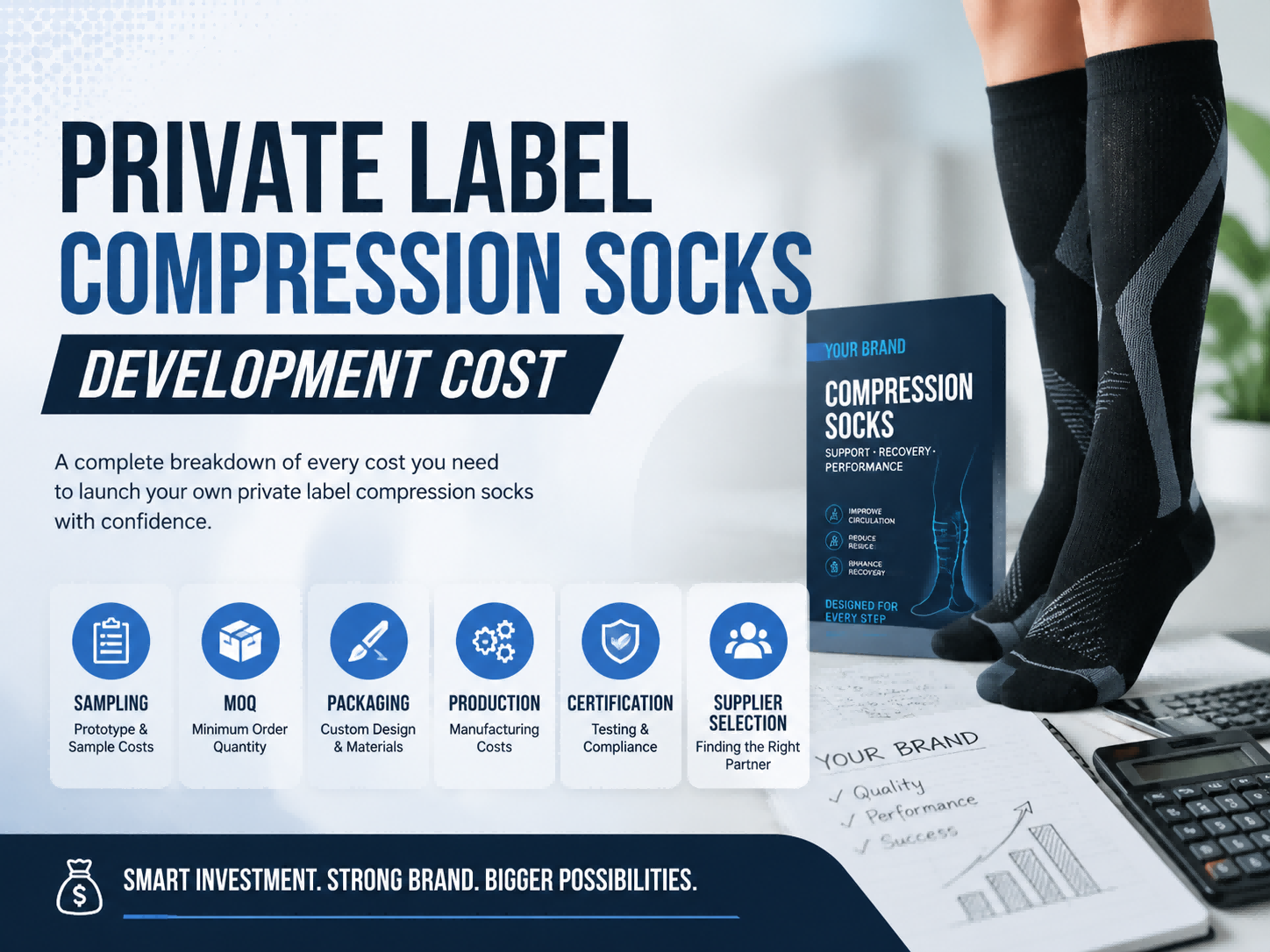
Private Label Products
Custom products usually require:
- Custom colors
- Logo knitting
- Customized packaging
- Special yarn selection
The MOQ is normally higher because materials and production setup need additional preparation.
Production lead time is usually around:
- Sample development: 7-15 days
- Bulk production: 25-40 days depending on quantity and customization
Planning ahead can help avoid shipping delays.
5. Confirm Packaging and Label Requirements
Many importers underestimate packaging requirements.
Before production, confirm:
- Individual packaging
- Barcode requirements
- Size labels
- Washing instructions
- Country of origin marking
- Medical claims
For private label brands, manufacturers can usually provide:
- Custom printed bags
- Brand labels
- Retail packaging
- Instruction cards
Clear packaging requirements prevent delays before shipment.
6. Choose the Right Shipping Method from China
Compression socks are lightweight products, so several shipping options are available.
Sea Freight
Best for:
- Large volume orders
- Cost control
- Regular supply
Advantages:
- Lowest transportation cost
- Suitable for wholesale orders
Disadvantage:
- Longer delivery time
Air Freight
Best for:
- Urgent replenishment
- Small orders
- New product launches
Advantages:
- Faster delivery
Disadvantage:
- Higher shipping cost
Express Shipping
Suitable for:
- Samples
- Small quantities
Companies often use express shipping when testing new suppliers before larger orders.
7. Control Quality Before Shipment
Quality inspection should happen before products leave China.
Important inspection points include:
Product Appearance
Check:
- Color consistency
- Knitting defects
- Loose threads
- Packaging damage
Compression Performance
Verify:
- Compression level
- Pressure distribution
- Size consistency
Quantity Inspection
Confirm:
- Ordered quantity
- Size breakdown
- Packaging quantity
A reliable supplier should provide production updates and inspection support.
8. Build a Long-Term Partnership with Your Supplier
Successful compression sock brands usually do not work with suppliers based only on the lowest price.
A reliable manufacturing partner can help with:
- Product development
- Material selection
- Compliance support
- Cost optimization
- New product expansion
Over time, a stable supplier relationship can reduce quality risks and improve profitability.
Final Thoughts
Importing compression socks from China can provide significant advantages in terms of manufacturing capability, customization options, and cost efficiency.
However, success depends on choosing the right factory, clearly defining product requirements, controlling quality, and building a reliable supply chain.
For medical brands and distributors, the goal is not simply to find the cheapest supplier — it is to find a manufacturing partner who can consistently deliver safe, comfortable, and market-ready compression products.
Compression Socks Supplier Evaluation Checklist for Medical Brands
China vs Europe Compression Socks Manufacturing
Related Article