How to Choose Compression Sock Levels

15–20 vs 20–30 vs 30–40 mmHg Explained
When sourcing compression socks, one of the most important decisions is choosing the correct compression level.
At first glance, many buyers think:
“Higher compression = better product”
But in reality, different markets require different compression levels.
Choosing the wrong level can lead to poor sales, discomfort complaints, or even compliance issues.
1. What Does mmHg Mean?
Compression strength is measured in mmHg (millimeters of mercury).
It indicates how much pressure is applied to the leg:
- Lower mmHg → light support
- Higher mmHg → stronger medical compression
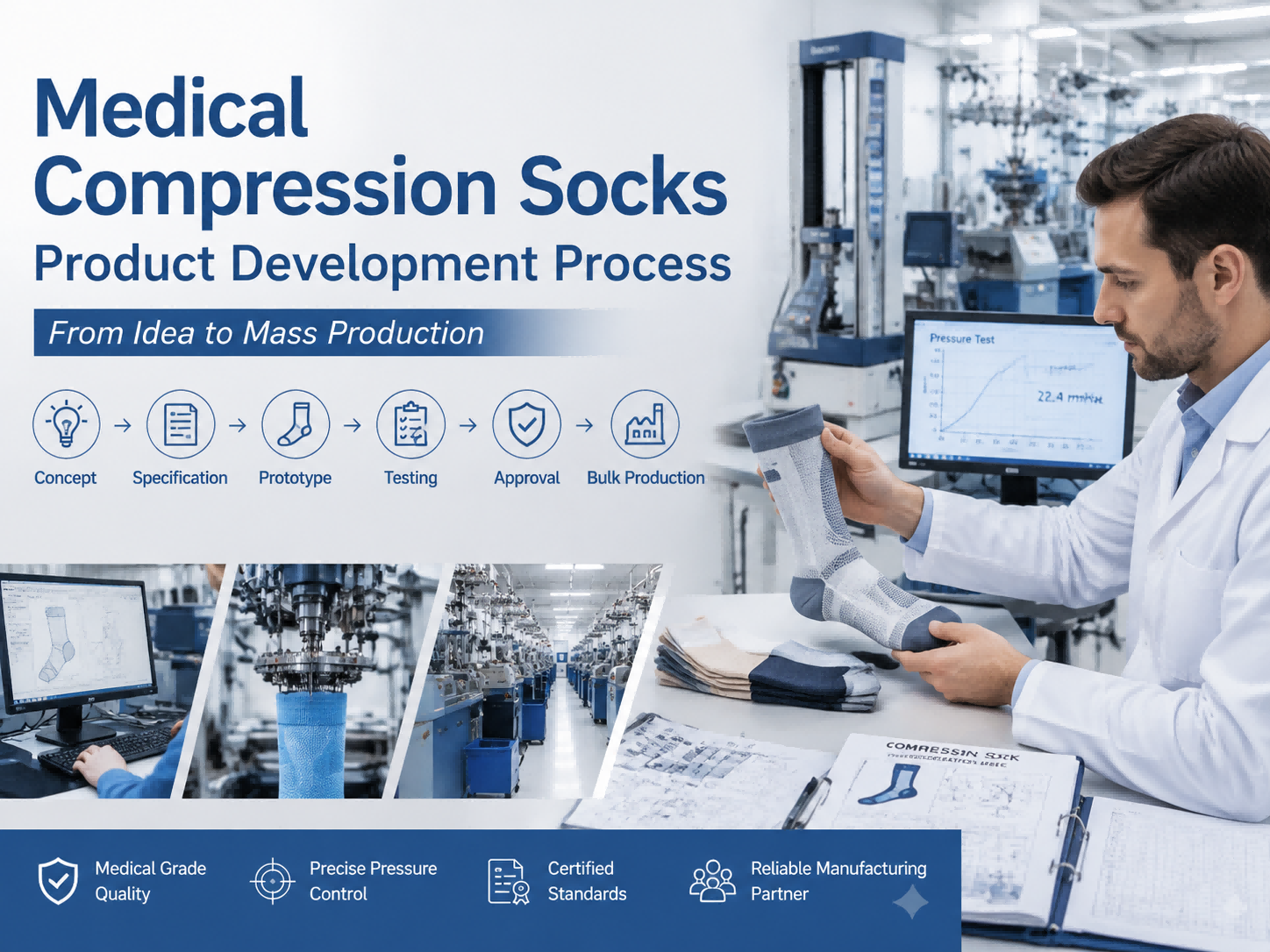
From a manufacturing perspective, achieving stable mmHg requires precise knitting control and quality testing in production.
2. 15–20 mmHg: Light Compression (Daily & Retail Market)
This is the most common entry-level compression range.
Typical use cases:
- Office workers
- Long travel (flights, driving)
- Daily leg fatigue relief
Market characteristics:
- High volume retail products
- Amazon & e-commerce best sellers
- Comfortable, easy to wear
Factory note:
This level is easier to produce and more stable in mass production, which makes it suitable for first-time buyers or retail brands.
3. 20–30 mmHg: Medical Support Level
This is the most widely used medical-grade compression level.
Typical use cases:
- Varicose vein prevention
- Nurses and healthcare workers
- Post-surgery recovery support
- Long standing professions
Market characteristics:
- Pharmacy distribution
- Medical supply channels
- Higher perceived product value
Factory note:
This level requires more precise compression control during production. Small deviations can affect comfort and effectiveness.
4. 30–40 mmHg: High Compression (Therapeutic Use)
This is a high-compression level used in more specialized cases.
Typical use cases:
- Severe venous conditions
- Lymphedema management
- Doctor-prescribed treatment
Market characteristics:
- Medical clinics
- Prescription-based sales
- Limited but high-value market
Factory note:
This level requires strict quality control and is not suitable for general retail positioning.
5. How to Choose the Right Level for Your Market
From our experience working with global buyers, the correct choice depends more on market positioning than product specification.
Here is a simple guideline:
- Retail / Amazon / Travel market → 15–20 mmHg
- Pharmacy / Medical distribution → 20–30 mmHg
- Clinical / therapeutic use → 30–40 mmHg
6. A Common Mistake Buyers Make
One frequent issue we see:
Buyers choose compression level based on “strength” instead of “market demand”.
For example:
- Selling 30–40 mmHg in retail channels → too strong, low repeat purchase
- Selling 15–20 mmHg in medical channels → not enough support
The right compression level is always tied to the end user, not just the product itself.
Final Thoughts
Compression level selection is one of the most important decisions in building a compression socks product line.
A good product is not just about pressure strength — it’s about matching the right compression level to the right market.
Looking for a Reliable Compression Socks Manufacturer?
We support global brands and distributors with:
- OEM & ODM compression socks development
- 15–40 mmHg full range production
- Stable compression calibration system
- Private label & packaging customization
- Flexible MOQ for market testing
Compression Socks Certification Guide
Why Compression Socks Prices Vary So Much
Related Article