How Medical Brands Develop Private Label Compression Socks

Building a private label compression socks line is not simply about putting a logo on an existing product.
For medical brands, pharmacies, and healthcare distributors, the process usually involves many decisions:
- Who is the target customer?
- What compression level is needed?
- Which materials provide the right balance of comfort and performance?
- How can the product meet market requirements?
A reliable manufacturing partner can help turn an idea into a finished product that is ready for the market.
1. Start With Market Positioning
Before developing a product, brands need to define their market.
Different customers have different expectations.
For example:
Medical & Healthcare Channels
Focus on:
- Accurate compression performance
- Clinical requirements
- Comfort for daily use
Retail & E-commerce Brands
Focus on:
- Appearance
- Packaging
- Customer experience
- Product differentiation
The product direction affects everything that follows, including materials, design, and packaging.
2. Choose the Right Compression Level
Compression level is one of the most important decisions.
Common categories include:
- 15–20 mmHg
- 20–30 mmHg
- 30–40 mmHg
The choice depends on:
- Target users
- Market regulations
- Product positioning
An experienced manufacturer can help brands select suitable specifications instead of simply producing a standard product.
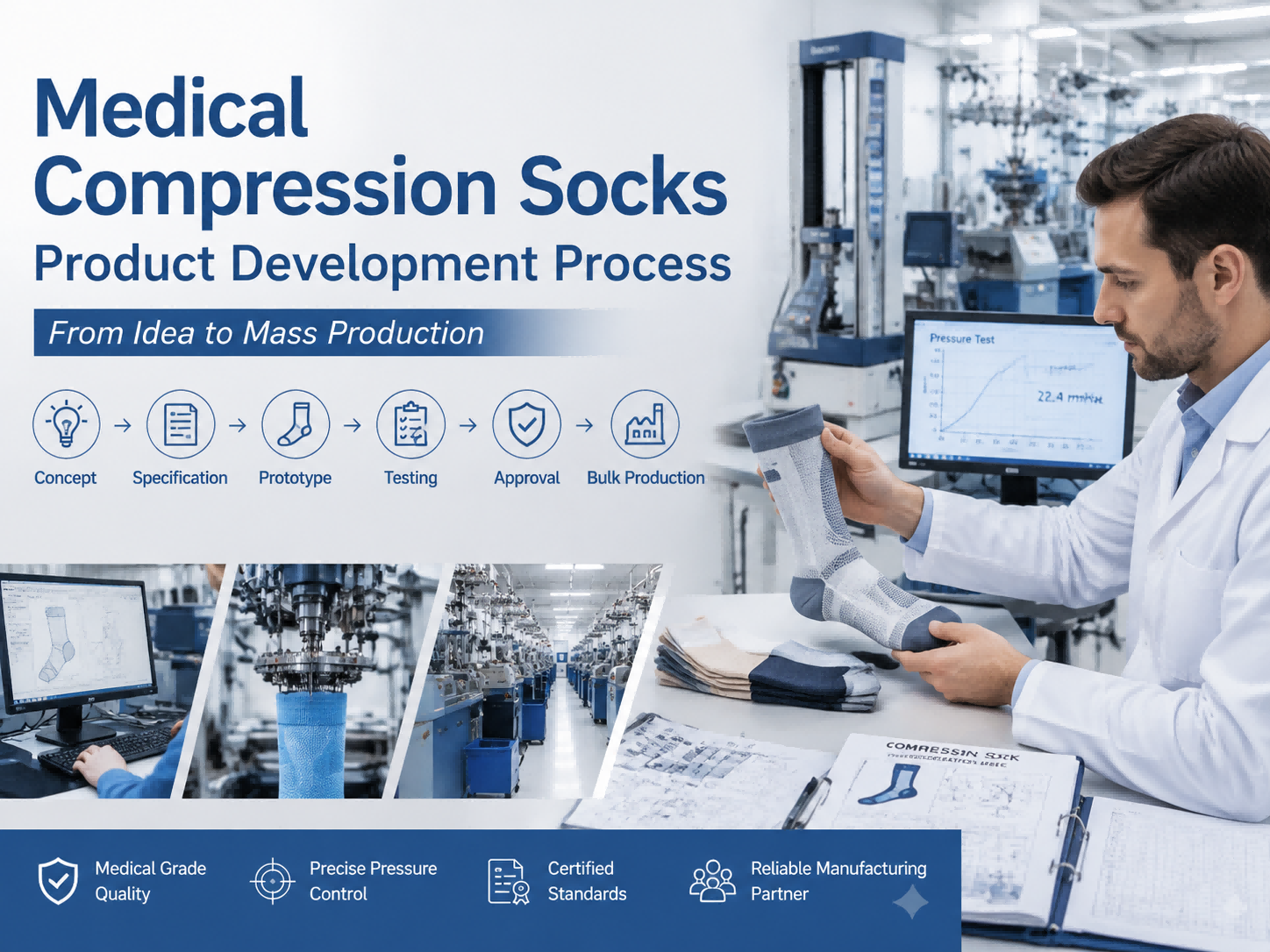
3. Develop the Product Specifications
After defining the product direction, the next step is creating detailed specifications.
This includes:
Materials
Options may include:
- Nylon for durability
- Spandex for elasticity
- Cotton or bamboo for comfort
- Functional fibers for added features
Product Design
Including:
- Length
- Color
- Size range
- Cuff design
- Toe construction
Clear specifications help ensure the final product matches the brand's expectations.
4. Sample Development and Testing
Before mass production, samples are developed for approval.
During this stage, brands usually check:
- Fit and comfort
- Compression feeling
- Appearance
- Material performance
Sample development is also the time to adjust details.
Making changes before bulk production can save both time and cost.
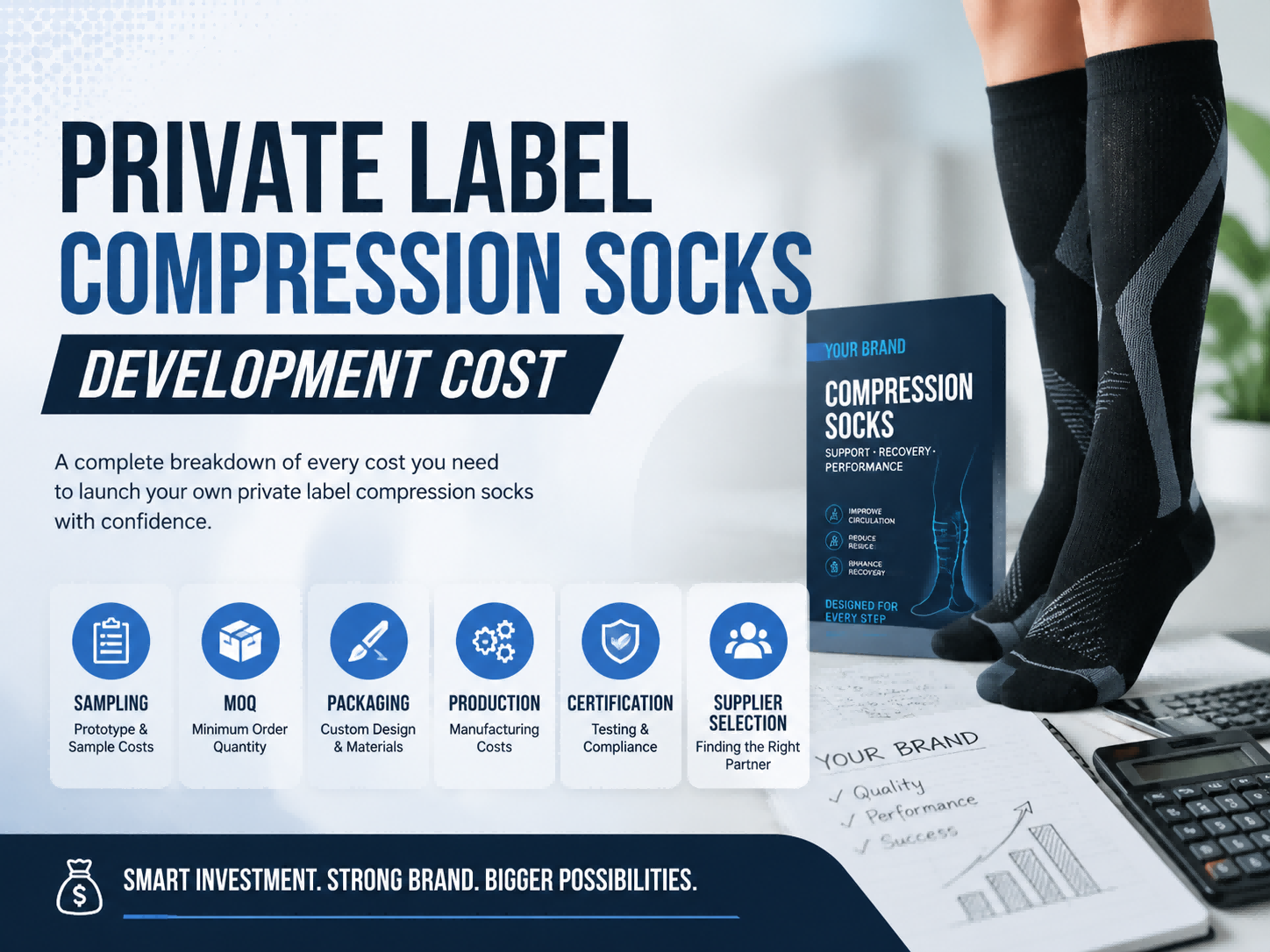
5. Packaging and Brand Customization
Private label is not only about the sock itself.
The product presentation also affects customer perception.
Brands may customize:
- Logo
- Labels
- Retail packaging
- Product instructions
- Barcode information
Professional packaging helps a product look ready for the market.
6. Production and Quality Control
Once the sample is approved, production begins.
A reliable factory should control each stage:
Material Inspection
Confirm yarn quality and specifications.
Knitting Process
Monitor:
- Size consistency
- Compression performance
- Appearance
Final Inspection
Check:
- Product quality
- Packaging accuracy
- Order quantity
For medical products, consistency between batches is critical.
7. Launch and Long-Term Development
Many successful brands start with one or two products and expand gradually.
After market feedback, they may develop:
- New colors
- Different compression levels
- New materials
- Additional product lines
A strong manufacturing partner can support this process as the brand grows.
Final Thoughts
Developing private label compression socks requires more than finding a factory.
It requires cooperation between the brand and manufacturer from product concept to final shipment.
The right partner can help with:
- Product development
- Manufacturing expertise
- Quality control
- Market requirements
For medical brands looking to build their own compression socks line, choosing an experienced manufacturer is the first step toward long-term success.
China vs Europe Compression Socks Manufacturing
What Makes a Good Compression Socks Supplier
Related Article