
Dance Day 2026 GCS for Medical Distributors
author: carol
2026-04-29

Does your product actually deliver graduated pressure? Or just a tight sock?
April 29th is International Dance Day. The dance world celebrates movement, but true performers are acutely aware of the dangers of leg fatigue. For wholesale buyers serving active professionals, understanding the science behind graded compression stockings (GCS) performance is crucial.
📊 Clinical research shows:
A 2005 study on GCS skin pressure distribution found that well-designed products apply the highest pressure at the ankle, gradually decreasing towards the thigh. However, the study also noted that many tested compression stockings failed to achieve a perfect gradient distribution, with some even showing an inverted pressure distribution in the mid-calf area [10†L20-L28].
For B2B buyers, this means choosing a supplier who can provide consistent pressure distribution data, not just the nominal mmHg value.
❓ Your customers will ask. Here are the answers.
🤔 Question 1: When should compression stockings be used?
According to clinical guidelines, compression stockings are suitable for the prevention and treatment of chronic edema, venous leg ulcers, post-thrombotic management (prevention of post-thrombotic syndrome), and certain cases of diabetic foot or cardiogenic edema requiring careful management.
🤔 Question 2: How to choose the appropriate pressure level based on specific circumstances?
Level I (15-21 mmHg): Mild to moderate edema, long-distance travel (3-6 hours), sedentary work (standing all day), pregnancy-related edema.
Level II (23-32 mmHg): Diagnosed varicose veins, moderate edema, maintenance therapy after sclerotherapy, and cases requiring higher therapeutic pressure.
Level III (34-46 mmHg): Lymphedema, severe chronic venous insufficiency, post-thrombotic syndrome with significant edema.
🤔 Question 3: How long should patients wear them?
For moderate or severe venous insufficiency, daily wear is generally recommended. If the condition progresses, patients should be followed up every 6 months and have their lower extremities reassessed.
🤔 Question 4: Who should not wear compression stockings?
Absolute contraindications include peripheral artery disease (ankle-brachial index <0.5), decompensated heart failure with severe edema, acute leg/foot infections, untreated deep vein thrombosis, and suspected skin cancer. For patients with an ankle-brachial index between 0.5 and 0.8, compression stockings should only be worn under the guidance of a vascular specialist.
🤔 Question 5: Can an ill-fitting stocking cause harm?
Yes. Ill-fitting compression stockings can lead to skin damage, pressure sores, or poor treatment outcomes. Our size chart covers S-XXL and offers an extra-wide calf option; we offer custom-made services for patients who exceed the standard size range.
🤔 Q6: Are there any side effects?
Some wearers have reported itching due to dry skin (moisturizing helps relieve this), allergies to latex/silicone strips (latex-free options are available), and, in rare cases, fungal infections (open-toe design minimizes this risk). Unless there is a medical indication, patients should be advised not to sleep in pressure garments.
📈 Why B2B buyers choose us:
✓ Each batch is quality guaranteed using pressure distribution mapping.
✓ OEKO-TEX® certified non-irritating fabric.
✓ Strong medical evidence supporting your selling proposition.
✓ Worldwide shipping + low minimum order quantity for easy market entry.
Nurses Day 2026 B2B Compression Opportunity
Earth Day 2026 Sustainable Compression Sourcing
Related Article

Learn what medical brands need to know before launching compression stockings, including compression classes, product types, knee high, thigh high, pantyhose, open toe and closed toe options.
What Medical Brands Should Know Before Launching Compression Stockings
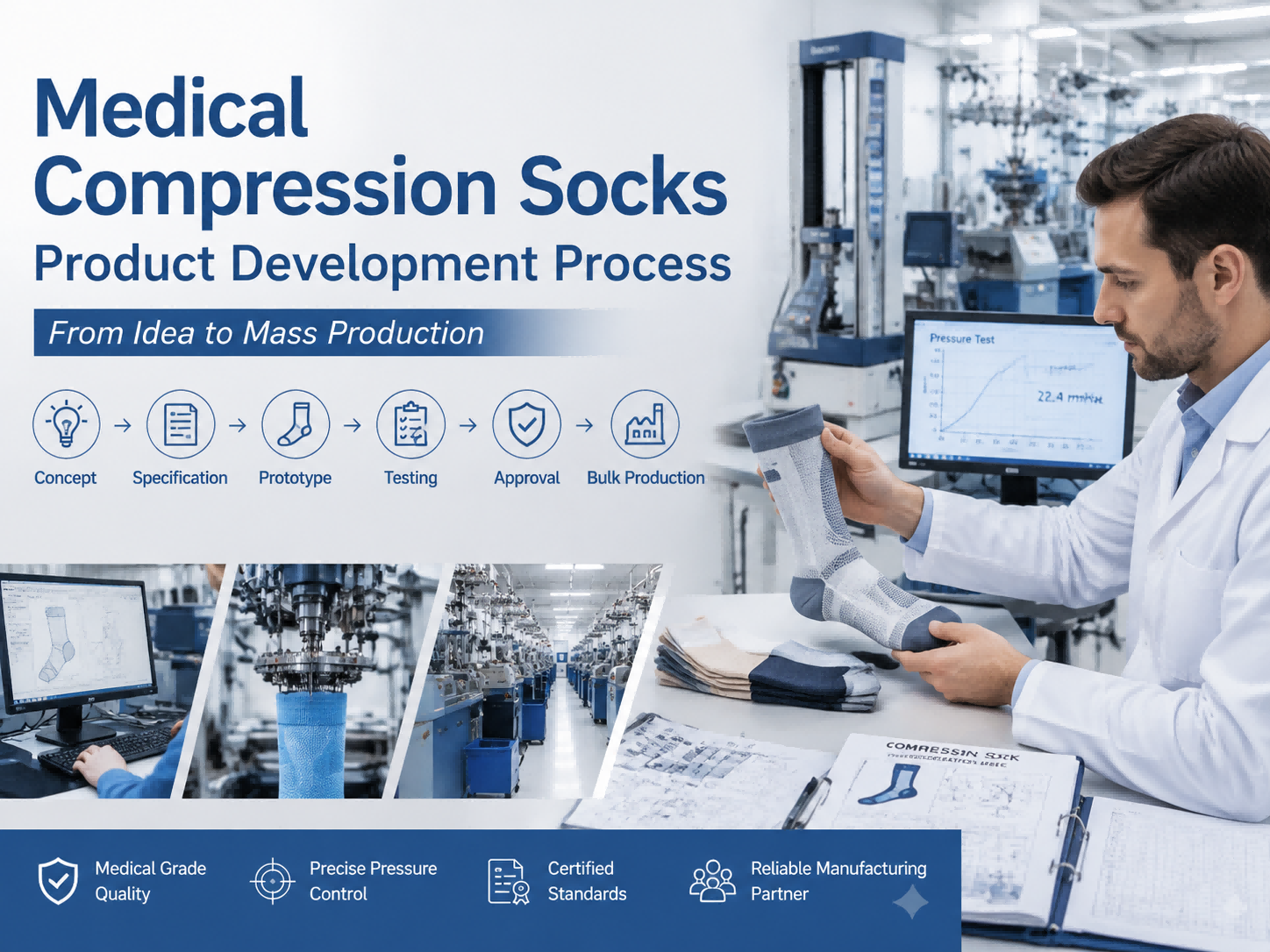
Learn how medical compression socks are developed from concept to mass production. This guide explains each step, including specification design, prototype development, testing, approval, and manufacturing for healthcare companies and medical brands.
Medical Compression Socks Product Development Process
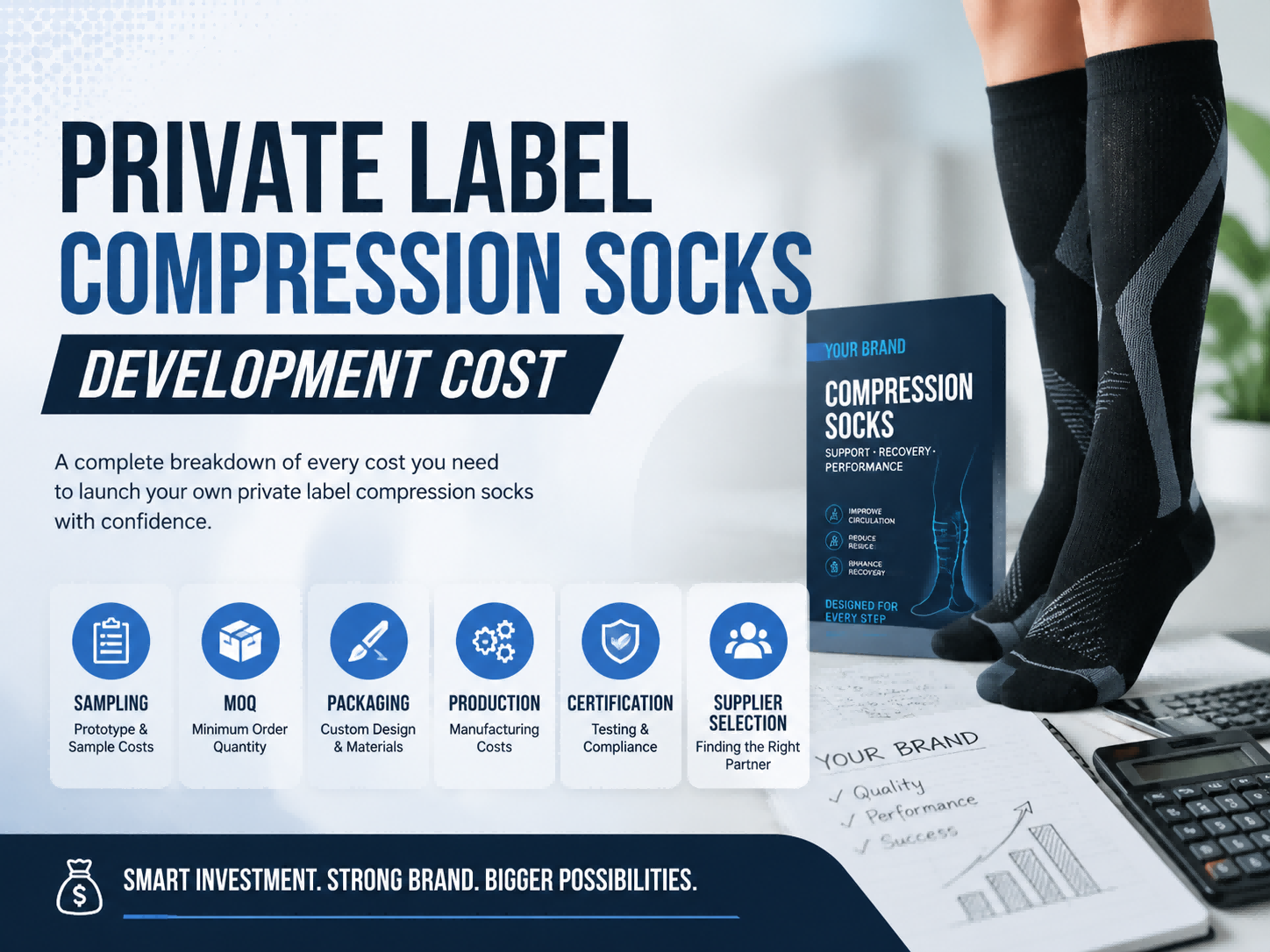
Learn how much it costs to develop private label compression socks, including sampling, MOQ, packaging, production, certification, and supplier selection.
Private Label Compression Socks Development Cost

Starting a compression socks brand requires more than selecting a product. This guide covers the key steps from market research and product selection to supplier sourcing, sampling, branding, and launch preparation. Learn how Amazon sellers, distributors, and healthcare startups can build a reliable compression socks business with the right manufacturing partner and product strategy.
How to Build a Compression Socks Brand in 2026