Compression Socks Supplier Evaluation Checklist for Medical Brands

Compression Socks Supplier Evaluation Checklist: What Medical Brands Should Check Before Choosing a Factory
Choosing the right compression socks supplier is one of the most important decisions for medical brands, distributors, and retailers.
Unlike ordinary socks, compression products require precise pressure control, accurate sizing, specialized knitting technology, and strict quality management. A supplier that looks competitive on price may create problems later — inconsistent compression levels, sizing issues, delayed deliveries, or failed compliance requirements.
Before placing an order, buyers should evaluate suppliers from several key areas.
This checklist can help you identify whether a compression socks manufacturer is a reliable long-term partner.
1. Manufacturing Experience and Product Expertise
The first question to ask is not only “How much is the price?” but:
“Does this supplier really understand compression products?”
Compression socks are technical medical textiles. The manufacturer should have experience producing different compression categories, such as:
- Medical compression stockings
- Varicose vein socks
- Anti-embolism stockings
- Sports compression socks
- Travel compression socks
- Custom private label compression products
An experienced factory should understand:
- Compression levels (mmHg)
- Pressure distribution design
- Medical sizing requirements
- Yarn performance
- Knitting structures
- Testing procedures
A supplier specializing only in regular socks may not have the technical capability required for compression products.
2. Knitting Technology and Production Equipment
The production equipment directly affects compression accuracy and product consistency.
When evaluating a supplier, ask:
What knitting machines do you use?
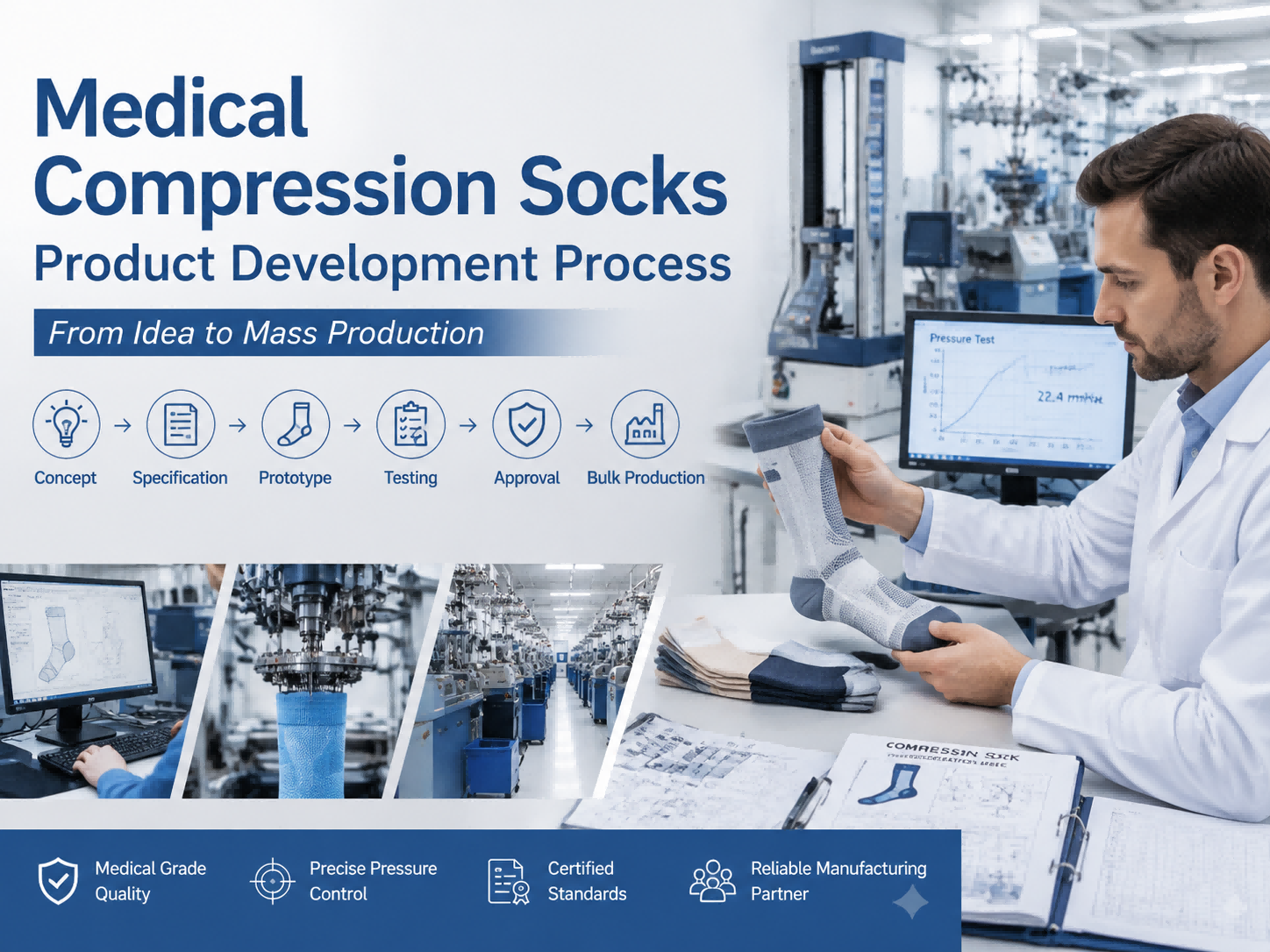
Professional compression sock manufacturers usually invest in advanced knitting equipment, including:
- German circular knitting machines
- Italian Lonati knitting machines
- Medical-grade computerized knitting systems
These machines help control:
- Graduated compression
- Fabric elasticity
- Pressure stability
- Product appearance
A reliable supplier should be able to explain how their equipment supports your product requirements instead of simply saying “we have machines.”
3. Compression Level Accuracy and Testing Capability
Compression socks are not just about tightness.
The pressure needs to be controlled according to the product specification.
Common compression levels include:
- Mild compression: 8–15 mmHg
- Moderate compression: 15–20 mmHg
- Medical compression: 20–30 mmHg and above
A qualified supplier should have processes to verify:
✓ Compression performance
✓ Size accuracy
✓ Elastic recovery
✓ Fabric durability
Ask suppliers:
- Do you test compression before shipment?
- How do you control pressure consistency between batches?
- Can you provide testing reports?
For medical-related products, consistency is more important than simply achieving a low price.
4. Quality Control System
A professional compression socks factory should have a complete quality management process.
A typical inspection process may include:
Incoming Material Inspection
Checking:
- Yarn quality
- Elasticity
- Color consistency
- Supplier documentation
Production Inspection
Monitoring:
- Knitting quality
- Compression performance
- Sewing quality
- Size accuracy
Final Inspection
Checking:
- Appearance defects
- Label accuracy
- Packaging
- Quantity
Before cooperation, buyers should ask:
“What quality control steps do you perform before shipment?”
A detailed answer usually reflects the supplier’s actual production management level.
5. Certifications and Compliance Documents
For healthcare-related products, certifications are an important part of supplier evaluation.
Depending on your target market, ask whether the supplier can provide:
- ISO 13485 quality management system
- CE MDR compliance support
- FDA-related documentation support
- OEKO-TEX certification
- BSCI social compliance
Different markets have different requirements.
For example:
- European medical brands may focus more on CE MDR compliance.
- US companies may require FDA-related documentation.
- Retail customers may pay more attention to material safety and social audits.
A good supplier should understand your market requirements and provide suitable documentation support.
6. OEM and Private Label Capability
Many brands do not simply buy standard products. They need customized solutions.
Before choosing a supplier, confirm their OEM capability:
Product Customization
Can they customize:
- Compression level?
- Colors?
- Sizes?
- Materials?
- Knitting patterns?
- Logo design?
Packaging Customization
Can they provide:
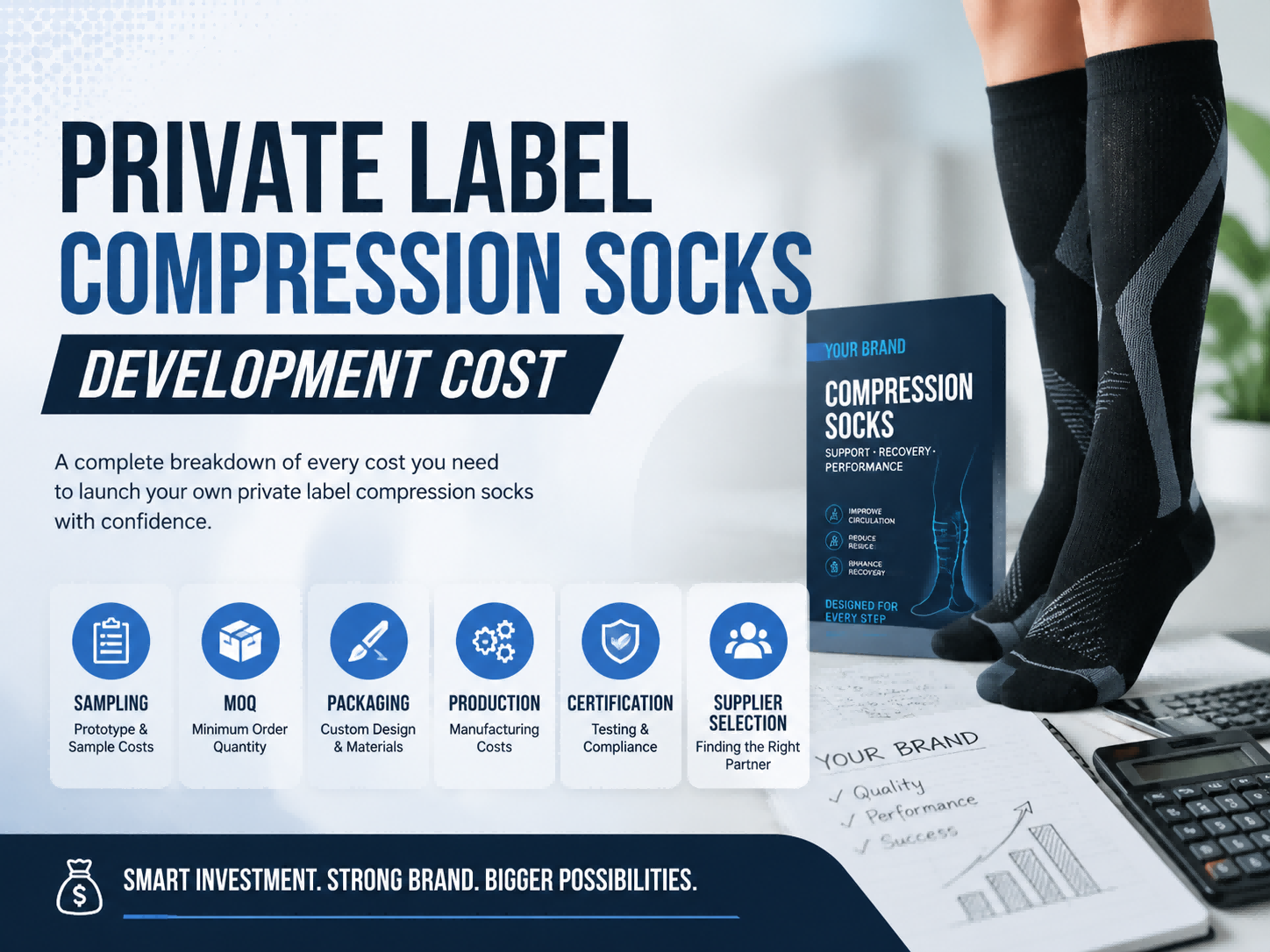
- Custom labels
- Printed bags
- Retail packaging
- Barcode labels
- Instruction cards
Development Support
A strong supplier should help transform your idea into a production-ready product.
This is especially important for brands launching new compression sock lines.
7. Minimum Order Quantity (MOQ) Flexibility
MOQ is an important factor for both established brands and startups.
Ask:
- What is the MOQ per style?
- What is the MOQ per color?
- Can different sizes be mixed?
- Is sample production available?
A supplier with reasonable MOQ policies can help brands test new products before large-scale investment.
However, extremely low MOQ with unlimited customization may indicate limited production capability.
8. Production Capacity and Delivery Reliability
A supplier should not only make samples well — they should deliver stable bulk orders.
Evaluate:
- Monthly production capacity
- Production lead time
- Raw material availability
- Backup production plans
- Previous export experience
Important questions:
- How long does bulk production usually take?
- How do you handle urgent orders?
- How do you prevent production delays?
Reliable delivery is essential for brands managing retail channels and inventory planning.
9. Export Experience and Communication
A good manufacturing partner should understand international business requirements.
Look for suppliers with experience exporting to:
- North America
- Europe
- Australia
- Middle East
Important factors include:
- Clear communication
- Fast response time
- Professional documentation
- Understanding of shipping terms
A supplier may produce good products, but poor communication can create unnecessary problems during cooperation.
10. Request Samples Before Bulk Orders
Never evaluate a compression socks supplier only through catalogs or photos.
Always test samples.
Recommended sample evaluation:
Product Performance
Check:
✓ Compression feeling
✓ Comfort
✓ Breathability
✓ Elastic recovery
Manufacturing Quality
Check:
✓ Stitching
✓ Heel and toe reinforcement
✓ Size accuracy
✓ Packaging quality
Compare Samples With Bulk Production
A professional supplier should have a process to ensure bulk production matches approved samples.
Final Compression Socks Supplier Evaluation Checklist
Before selecting a supplier, confirm:
☐ Experience with compression products
☐ Advanced knitting equipment
☐ Stable compression performance
☐ Quality control system
☐ Required certifications
☐ OEM/private label capability
☐ Reasonable MOQ
☐ Reliable production capacity
☐ Export experience
☐ Sample approval process
Choosing a Supplier Is About More Than Price
The lowest quotation does not always create the lowest cost.
Quality issues, customer complaints, delayed shipments, and compliance problems can quickly increase the real cost of sourcing.
For medical brands and distributors, the ideal compression socks supplier should provide:
Technical expertise + stable quality + customization capability + reliable delivery.
Building a long-term manufacturing partnership starts with choosing the right factory.
About Compports
Compports specializes in OEM and private label compression socks manufacturing, providing medical compression stockings, anti-embolism socks, sports compression socks, and customized compression solutions for global brands and distributors.
With professional knitting technology, strict quality control, and export experience, Compports helps healthcare companies develop reliable compression products for different markets.
Why Experienced Medical Sock Manufacturers Matter
How to Import Compression Socks from China
Related Article