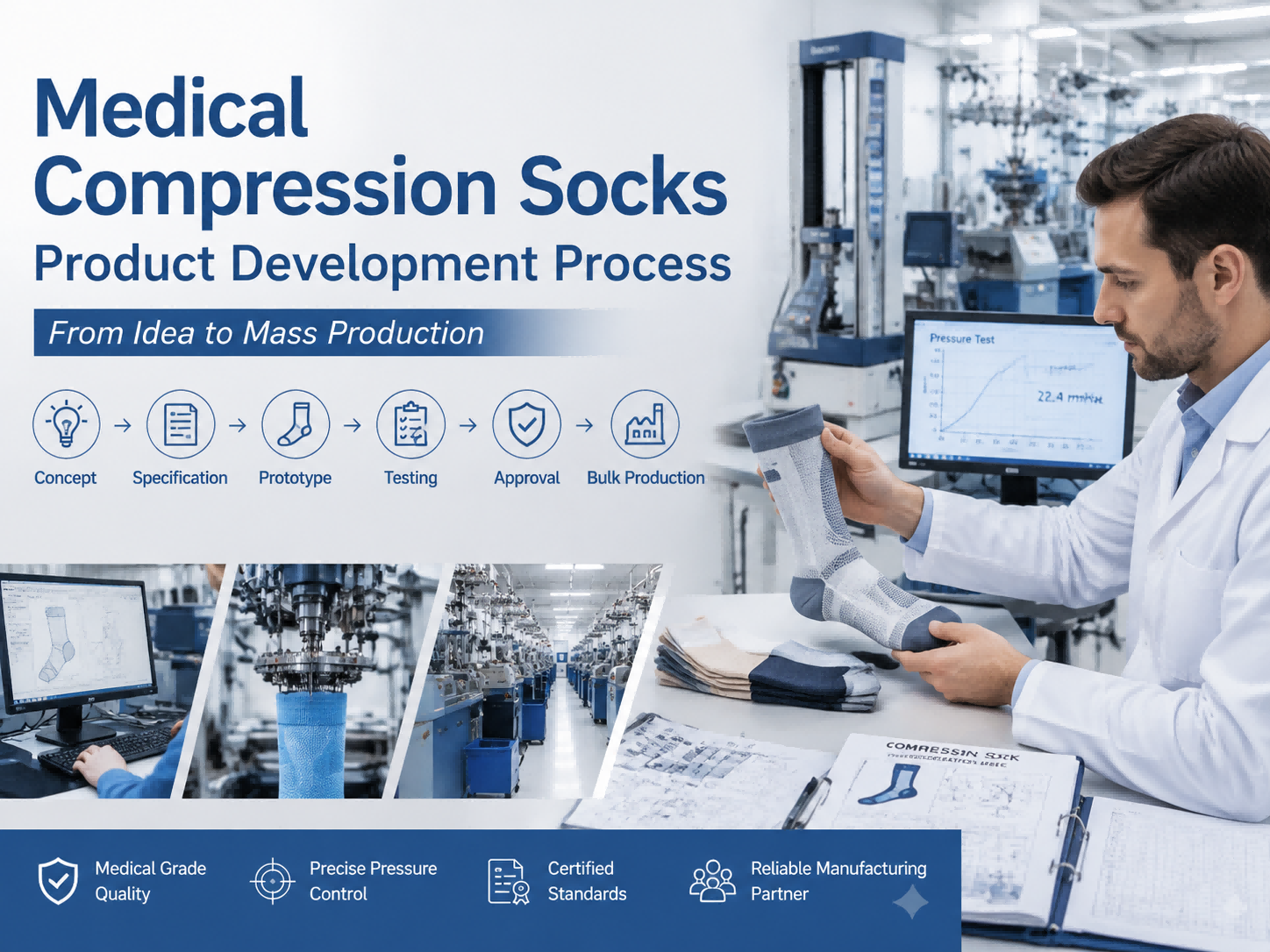
Compression Socks Factory Audit Checklist

How to Evaluate a Reliable Compression Socks Manufacturer
Choosing the right compression socks manufacturer is one of the most important decisions for brands, distributors, and medical suppliers.
A factory audit helps buyers understand whether a supplier has:
- Stable production capability
- Reliable quality control
- Professional manufacturing experience
- The ability to support long-term cooperation
Before placing a large order, a proper factory evaluation can help reduce risks such as quality issues, delivery delays, and inconsistent products.
1. Manufacturing Experience & Product Expertise
The first thing to check is whether the factory truly specializes in compression socks.
A professional compression socks manufacturer should understand:
- Different compression levels
- Medical and non-medical applications
- Size grading
- Material performance
- Production requirements
Ask the supplier:
✓ How many years have you produced compression socks?
✓ Do you manufacture medical compression products?
✓ Which markets do you supply?
Experience matters because compression socks require more technical control than regular socks.
2. Production Equipment & Capacity
The factory’s equipment directly affects product consistency.
During an audit, check:
Knitting Machines
Confirm:
- Machine type
- Machine quantity
- Production capacity
- Maintenance condition
Specialized knitting machines help control:
- Compression distribution
- Elasticity
- Product shape
Production Capacity
Important questions:
- What is the monthly production capacity?
- How many machines are available?
- How do you arrange production schedules during peak seasons?
A factory should have enough capacity to support your future growth.
3. Material Control System
Compression performance depends heavily on materials.
A reliable factory should have clear control over:
Yarn Selection
Check:
- Material composition
- Yarn suppliers
- Incoming inspection process
Common materials include:
- Nylon
- Spandex
- Cotton
- Bamboo fiber
- Functional fibers
Material Traceability
The factory should be able to track:
- Yarn batch
- Production date
- Supplier information
This helps identify problems quickly if quality issues occur.
4. Quality Control Process
Quality inspection should not only happen before shipment.
A professional factory should have quality control throughout production.
Check whether they inspect:
During Production
Including:
- Knitting defects
- Size accuracy
- Appearance issues
Finished Products
Including:
- Compression performance
- Measurements
- Color consistency
- Packaging accuracy
Ask:
"What happens if products fail inspection?"
A good supplier should have a clear corrective action process.
5. Compression Testing Capability
For medical compression socks, compression accuracy is critical.
The factory should understand different pressure levels, such as:
- 15–20 mmHg
- 20–30 mmHg
- 30–40 mmHg
Ask whether they have:
- Compression testing equipment
- Testing standards
- Quality records
A factory that only checks appearance may not be enough for medical applications.
6. Certifications & Compliance
For international markets, certifications are important.
Depending on your target market, check:
Medical Quality System
- ISO 13485
Product Compliance
- CE MDR (European market)
- FDA requirements (US market)
Material Safety
- OEKO-TEX®
Factory Responsibility
- BSCI (if required)
Always verify that certificates match the actual factory.
7. Sample Approval Process
A professional supplier should have a clear sample process.
Check:
- How samples are developed
- How many adjustments are allowed
- How bulk production follows approved samples
Important documents include:
- Size chart
- Material specification
- Color reference
- Packaging details
Clear approval standards help avoid disputes between samples and bulk orders.
8. Packaging & Customization Ability
For private label brands, check whether the factory supports:
- Custom labels
- Logo printing
- Retail packaging
- Barcode labels
- Customized instructions
A supplier with OEM experience can help brands launch products faster.
9. Communication & Project Management
A factory audit is not only about machines.
Good communication is also important.
Evaluate:
- Response speed
- Technical understanding
- Problem-solving ability
- Production updates
A reliable partner should communicate problems early instead of waiting until shipment.
Final Factory Audit Checklist
Before cooperation, buyers should confirm:
✅ Compression socks production experience
✅ Professional knitting equipment
✅ Stable material supply
✅ Quality control system
✅ Compression testing capability
✅ Required certifications
✅ OEM/private label experience
✅ Reliable delivery management
Final Thoughts
A factory audit is not just about checking equipment.
The goal is to find a manufacturing partner that can provide:
- Consistent quality
- Stable production
- Professional support
- Long-term cooperation
For medical compression socks, choosing the right factory can directly affect your brand reputation and customer satisfaction.
10 Questions for a Compression Socks Supplier
Launch Compression Socks Brand in 30 Days
Related Article