China vs Europe Compression Socks Manufacturing

For medical brands, distributors, and healthcare companies planning to source compression socks, manufacturing location is one of the most important decisions.
Europe has a long history in medical textile production and is known for strict quality standards. China, on the other hand, has become one of the world's largest compression sock manufacturing hubs, offering strong production capacity and supply chain advantages.
But when comparing China vs Europe compression socks manufacturing costs, the decision is not simply about the lowest factory price. Buyers need to consider production efficiency, raw materials, labor costs, compliance requirements, customization capability, and long-term supply stability.
This article provides a practical comparison from a B2B sourcing perspective.
1. Labor Cost: A Major Difference in Manufacturing Expenses
Labor cost is one of the biggest factors affecting compression sock production prices.
European manufacturers typically operate with higher labor expenses due to higher wages, energy costs, and operational overhead. These costs are reflected in the final product price.
China has developed a mature textile manufacturing ecosystem with skilled workers, specialized knitting technicians, and large-scale production facilities. This allows factories to maintain competitive pricing while producing complex medical compression products.
For brands purchasing thousands or tens of thousands of pairs, labor cost differences can significantly impact total procurement budgets.
China advantage:
- Lower manufacturing labor costs
- Experienced compression textile workforce
- Efficient production processes for large-volume orders
Europe advantage:
- Local production closer to European markets
- Shorter domestic transportation routes for European buyers
2. Raw Material Supply and Production Efficiency
Compression socks require precise materials to achieve consistent pressure levels, durability, and comfort.
Common materials include:
- Nylon / Microfiber Nylon
- Lycra® Elastane
- Polyester
- Cotton blends
- Specialized functional fibers
China has a complete textile supply chain, from yarn suppliers to knitting factories, dyeing facilities, packaging suppliers, and logistics providers. This integrated supply chain helps reduce sourcing complexity and production delays.
European manufacturers often rely on imported raw materials or smaller supplier networks, which can increase material costs.
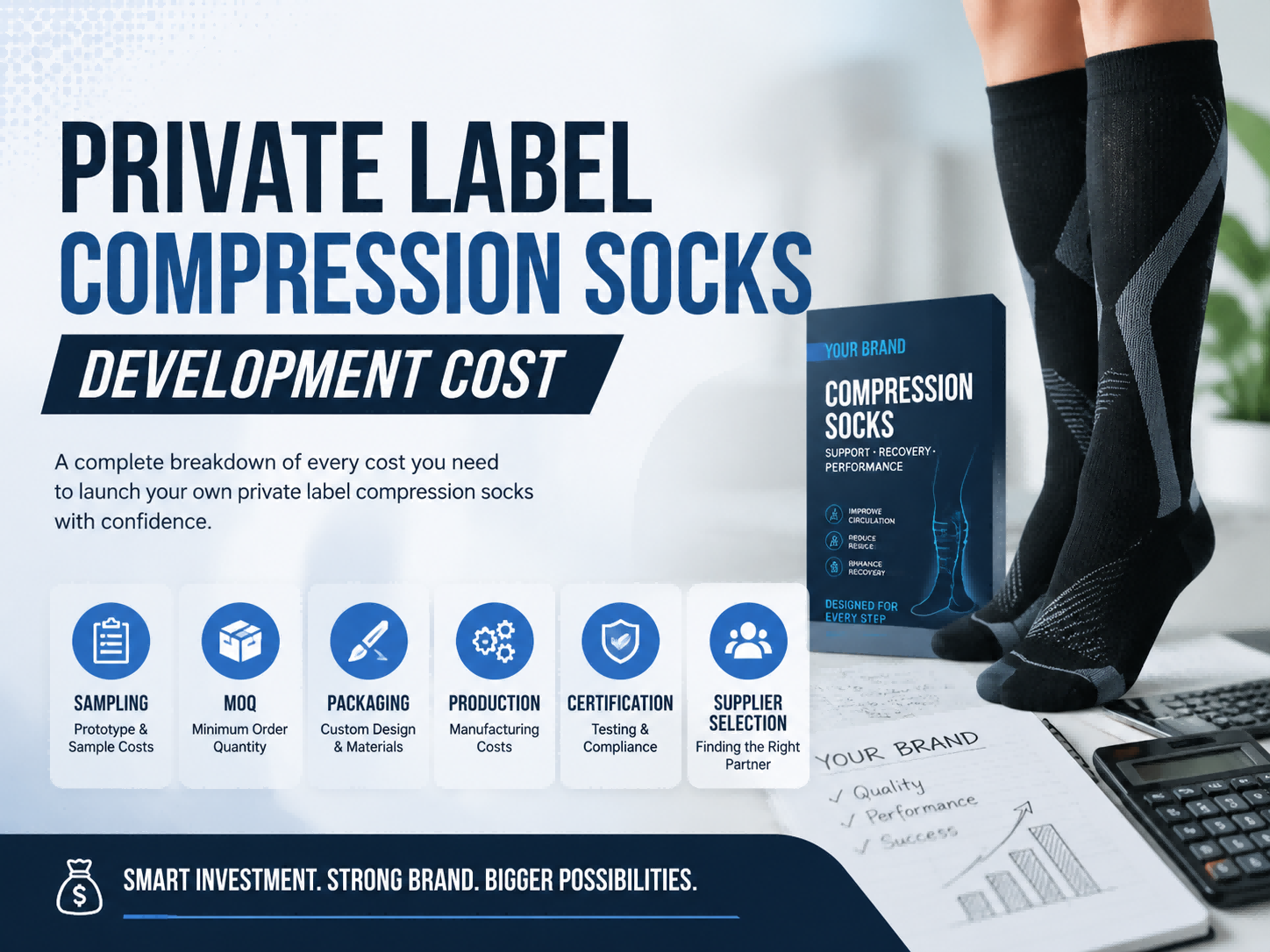
For example, when developing private label compression socks, Chinese manufacturers can usually manage:
- Custom yarn selection
- Color matching
- Compression level adjustment
- Packaging customization
- Label production
within one coordinated supply chain.
3. Production Scale: Why Volume Matters
Manufacturing scale has a direct impact on unit cost.
Large Chinese compression sock factories usually operate with:
- Advanced knitting machines
- Multiple production lines
- Experienced quality control teams
- High-volume manufacturing capability
This allows manufacturers to spread fixed costs across larger production quantities.
For example:
A medical brand ordering several thousand pairs may achieve better pricing from a factory with dedicated production capacity compared with a smaller European workshop.
However, European manufacturers may have advantages for:
- Small local orders
- Highly specialized products
- Faster regional replenishment
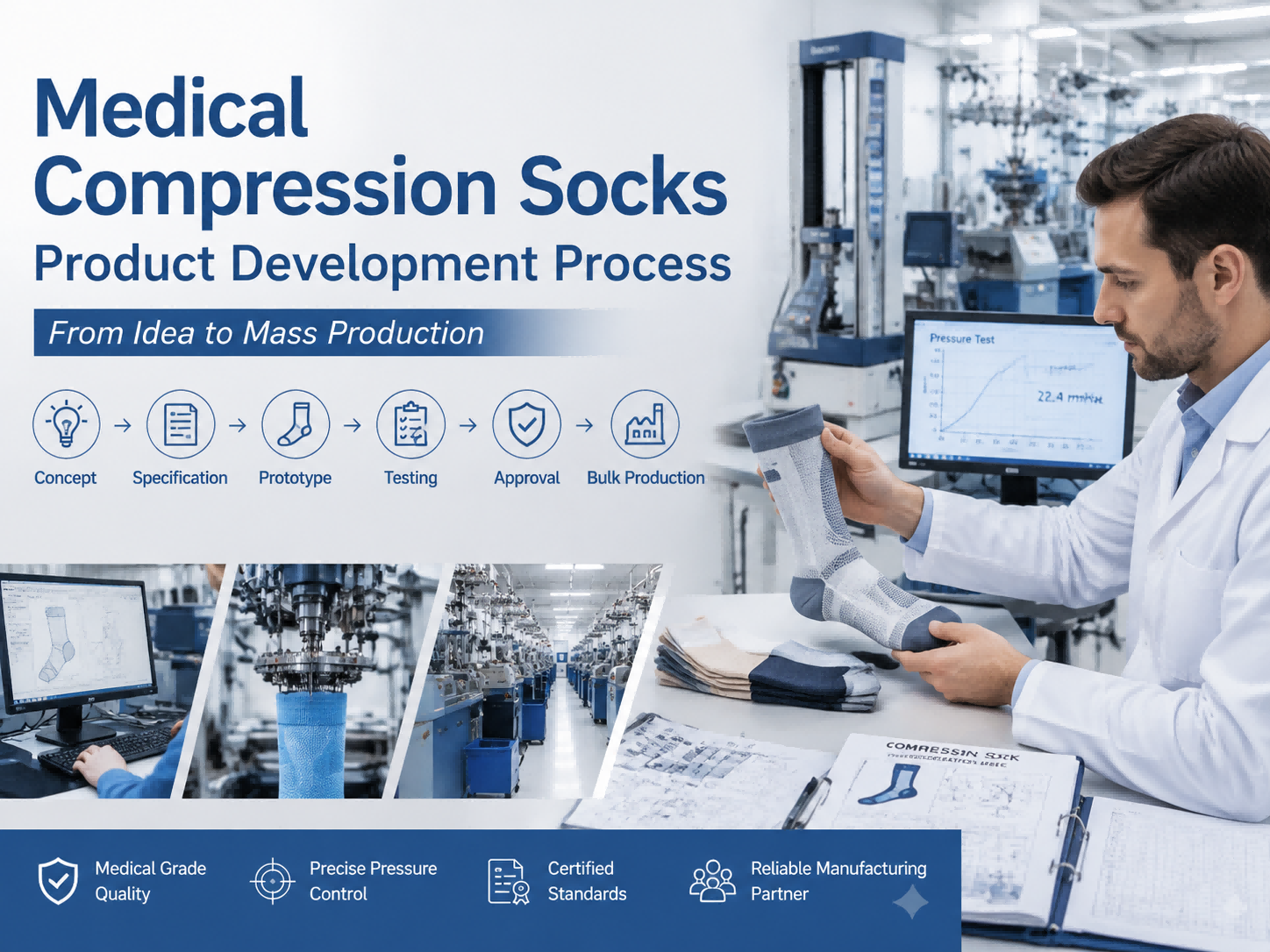
4. Equipment and Technology Comparison
Modern compression socks require accurate pressure control and consistent knitting technology.
Both China and Europe have access to advanced knitting equipment.
Many Chinese factories use internationally recognized machines, including European-origin technology, to produce:
- Medical compression stockings
- Anti-embolism stockings
- Sports compression socks
- Custom private label products
The final product quality depends less on the manufacturing country and more on:
- Machine condition
- Production experience
- Quality management system
- Testing procedures
A qualified manufacturer should be able to provide:
- Compression testing reports
- Material specifications
- Size charts
- Quality inspection procedures
5. Compliance and Certification Considerations
For medical compression socks, compliance is often more important than the production location.
European buyers usually focus on:
- CE MDR requirements
- ISO 13485 quality management
- Biocompatibility requirements
- Product documentation
A Chinese manufacturer with proper certifications can supply products that meet international market requirements.
Before selecting a supplier, buyers should evaluate:
✔ Factory certifications
✔ Quality control process
✔ Product testing capability
✔ Export experience
✔ Documentation support
A lower price without reliable quality control may create higher costs later through returns, complaints, or regulatory issues.
6. Lead Time and Supply Chain Flexibility
Lead time is another important factor for medical brands.
European production may offer shorter transportation times within Europe, but manufacturing capacity can be limited depending on the supplier.
Chinese manufacturers usually provide:
- Larger production capacity
- Flexible customization options
- More packaging choices
- Better support for growing brands
Typical production planning includes:
- Sample development
- Material preparation
- Production
- Quality inspection
- Export shipment
For brands building long-term supply relationships, production flexibility can be a major advantage.
7. Estimated Cost Difference: China vs Europe Compression Socks
The exact price depends on:
- Compression level (15-20 mmHg, 20-30 mmHg, etc.)
- Length (knee high, thigh high, pantyhose)
- Material composition
- Quantity
- Packaging requirements
- Certification needs
In general:
| Cost Factor | China Manufacturing | Europe Manufacturing |
|---|---|---|
| Labor Cost | Lower | Higher |
| Raw Material Supply | Strong textile supply chain | Higher material cost |
| Large Volume Orders | Highly competitive | Higher cost |
| Customization | Flexible | Available but often more expensive |
| Lead Time | Longer shipping, faster production capacity | Faster local delivery |
| Compliance | Depends on manufacturer | Strong regulatory experience |
| Unit Price | Usually lower | Usually higher |
For many international medical brands, China remains an attractive option because it balances cost efficiency with manufacturing capability.
8. How Should Medical Brands Choose Between China and Europe?
There is no universal answer.
European manufacturing may be suitable for companies that prioritize:
- Local production
- European supply chains
- Smaller quantities
- Faster regional delivery
Chinese manufacturing may be a better choice for companies that need:
- Competitive pricing
- Large production capacity
- OEM/private label development
- Flexible customization
- Long-term supply partnerships
The key is not choosing a country. It is choosing the right manufacturing partner.
Conclusion: Cost Is Only One Part of the Decision
When comparing China vs Europe compression socks manufacturing costs, the lowest unit price should not be the only consideration.
A reliable supplier should help brands achieve:
- Stable product quality
- Competitive pricing
- Consistent compression performance
- Reliable delivery
- Regulatory support
For healthcare companies developing or expanding their compression sock product lines, working with an experienced manufacturer can create long-term advantages beyond initial cost savings.
How to Import Compression Socks from China
How Medical Brands Develop Private Label Compression Socks
Related Article