Medical Compression Socks vs Regular Compression Socks: What Buyers Need to Know

For healthcare distributors, medical brands, and professional compression therapy suppliers, choosing the right compression socks is not only about product appearance or price. The key differences between medical compression socks and regular compression socks are related to pressure accuracy, material performance, testing standards, and end-user requirements.
As demand for compression therapy products continues to grow in North America and Europe, buyers need to understand what separates a true medical-grade compression product from a general consumer compression sock.
1. Medical Grade vs Consumer Grade Compression Socks
At first glance, medical compression socks and regular compression socks may look similar. However, they are designed for different purposes.
Medical Compression Socks
Medical-grade compression socks are developed for healthcare applications where controlled pressure delivery is important.
Common applications include:
- Venous insufficiency management
- Varicose vein support
- Post-surgery recovery
- Edema management
- Blood circulation support
- Deep vein thrombosis (DVT) prevention
These products usually require:
- Accurate compression levels (mmHg)
- Strict size grading
- Consistent pressure distribution
- Professional testing processes
- Stable production quality
For healthcare distributors and medical brands, product consistency is critical because patients rely on the expected therapeutic effect.
Regular Compression Socks
Consumer compression socks are mainly designed for daily comfort and lifestyle use.
Typical users include:
- Travelers
- Office workers
- Runners
- Fitness enthusiasts
- People standing for long hours
They often focus on:
- Comfort
- Breathability
- Fashion design
- Affordable pricing
While they can provide mild support, they may not meet medical requirements for therapeutic compression.
2. Why mmHg Accuracy Matters
One of the biggest differences between medical and regular compression socks is compression pressure accuracy.
Compression level is measured in mmHg (millimeters of mercury).
Common compression categories include:
| Compression Level | Typical Application |
|---|---|
| 15-20 mmHg | Mild medical support, travel, daily circulation support |
| 20-30 mmHg | Moderate medical compression, varicose vein management |
| 30-40 mmHg | Higher medical compression under professional guidance |
For medical compression products, the pressure should be:
- Accurate at the ankle area
- Gradually reduced toward the upper leg
- Consistent between different sizes and production batches
A product labeled as 20-30 mmHg should actually deliver the expected compression range. Inaccurate pressure may affect product performance and customer satisfaction.
3. Testing Methods: How Quality Is Verified
Professional buyers should evaluate how a manufacturer controls compression performance.
Common testing methods include:
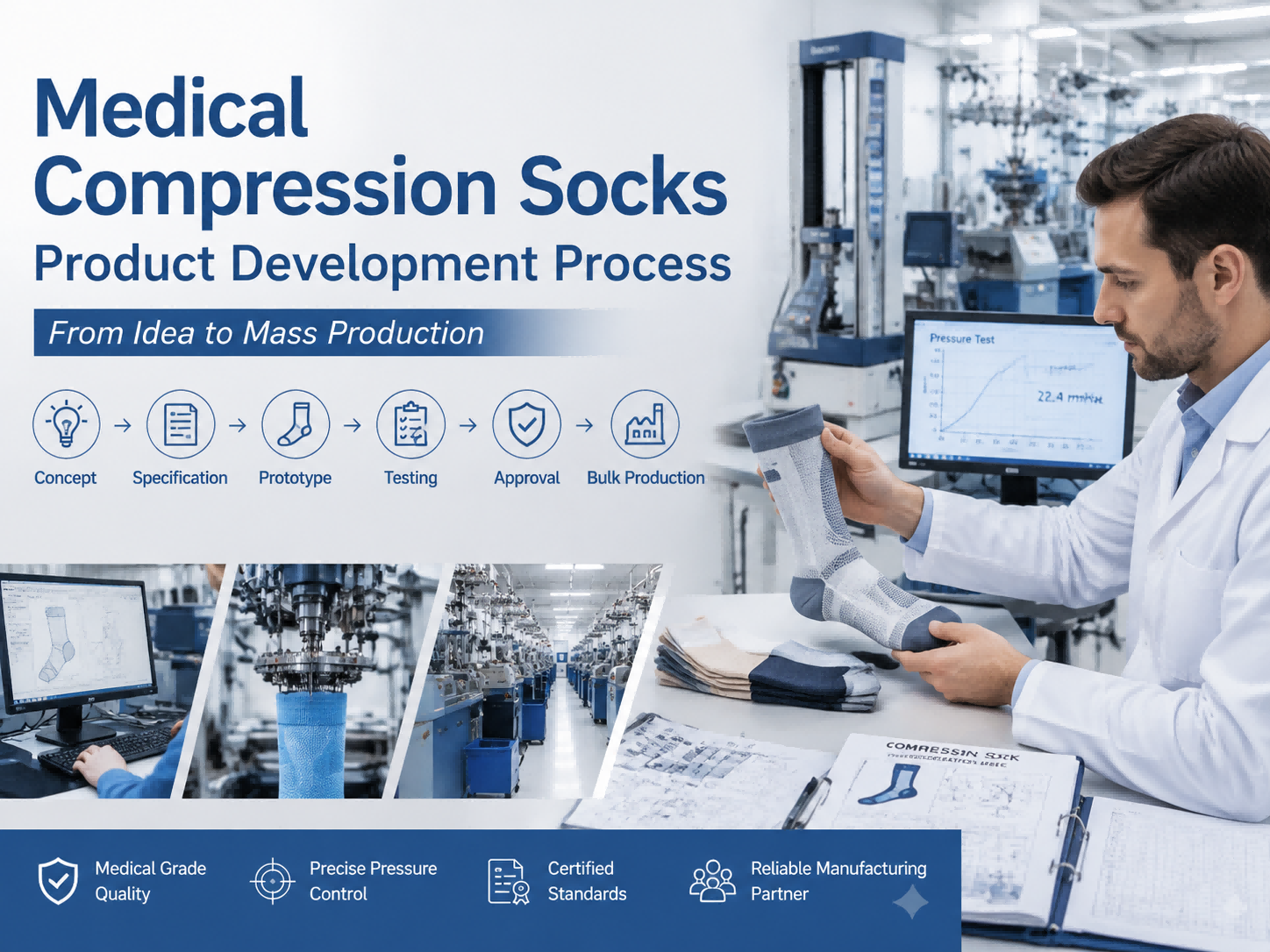
Pressure Testing
Compression testing equipment measures the actual pressure applied at different points of the sock.
Key checkpoints usually include:
- Ankle pressure
- Calf pressure
- Leg pressure distribution
This helps ensure the graduated compression effect.
Size and Stretch Testing
Medical compression socks require accurate sizing because compression performance depends on the relationship between:
- Leg circumference
- Sock dimensions
- Elastic recovery
Manufacturers should test:
- Length after stretching
- Width expansion
- Elastic recovery after repeated use
Material Performance Testing
High-quality compression socks should maintain:
- Compression stability
- Shape recovery
- Durability after washing
This is especially important for healthcare customers who expect repeated daily use.
4. Material Differences Between Medical and Regular Compression Socks
Material selection directly affects comfort, compression stability, and product lifespan.
Medical Compression Socks Materials
Professional medical compression socks often use a combination of:
Nylon / Microfiber Nylon
Benefits:
- Smooth surface
- High durability
- Better elasticity recovery
- Skin-friendly feeling
Lycra® Elastane / Spandex
Benefits:
- Maintains compression over time
- Provides controlled stretch
- Improves fit consistency
Special Functional Fibers
Depending on market requirements:
- Moisture-wicking polyester
- Cotton blends
- Bamboo fiber
- Antibacterial fibers
Medical customers usually prioritize long-term performance rather than only softness.
Regular Compression Socks Materials
Consumer products may use:
- Standard nylon
- Polyester blends
- Lower-cost elastic materials
These materials can provide comfort but may have limitations in:
- Pressure consistency
- Elastic recovery
- Long-term compression retention
5. Different Target Customers Require Different Products
Before sourcing compression socks, buyers should define their target market.
Healthcare Distributors
Usually require:
- Medical compression classes
- Reliable pressure accuracy
- Documentation and certifications
- Stable production quality
Typical customers:
- Hospitals
- Clinics
- Pharmacies
- Medical supply companies
Private Label Brands
Usually focus on:
- Custom designs
- Packaging
- Brand positioning
- Product differentiation
Important supplier capabilities:
- OEM experience
- Material options
- Size customization
- Quality consistency
Sports & Wellness Brands
Usually prioritize:
- Comfort
- Breathability
- Performance fabrics
- Attractive designs
Products may focus more on:
- Running compression socks
- Recovery socks
- Travel compression socks
6. How Buyers Should Evaluate a Compression Socks Supplier
When selecting a manufacturer, buyers should look beyond price.
Key questions include:
Does the factory understand medical compression standards?
A supplier experienced in medical compression products should understand:
- Pressure control
- Size grading
- Material selection
- Testing requirements
Can they provide consistent production quality?
Important factors:
- Production equipment
- Quality control process
- Batch inspection
- Experience with international markets
Can they support OEM and private label projects?
For brands developing their own products, suppliers should provide:
- Custom labels
- Packaging solutions
- Color options
- Product development support
Conclusion: Choosing the Right Compression Socks for Your Market
Medical compression socks and regular compression socks serve different markets.
For healthcare applications, buyers should prioritize:
- Accurate mmHg performance
- Reliable testing methods
- Medical-grade materials
- Stable manufacturing quality
For lifestyle and sports markets, comfort, design, and price may become more important.
Choosing the right supplier is the first step to building a successful compression sock product line. A manufacturer with strong medical compression experience can help brands deliver consistent quality and meet the expectations of healthcare professionals and end users.
How Compression Socks Manufacturers Ensure Pressure Accuracy
How to Select the Right Compression Socks Manufacturer for Your Market
Related Article