Graduated Compression vs. Uniform Compression: Why the Difference Matters

This is not the case.
The real barrier to entry in the medical and high-end sports compression apparel market lies in one engineering standard: true progressive compression. Understanding the technical differences between progressive compression and one-size-fits-all compression is crucial for maintaining brand reputation and ensuring user safety.
The Mechanics of True Graduated Compression
True graded compression stockings are precisely designed with pressure distribution to work in conjunction with the body's circulatory system. Since the heart must overcome gravity to pump blood from the lower limbs back to the upper limbs, the stockings must act as an auxiliary pump.
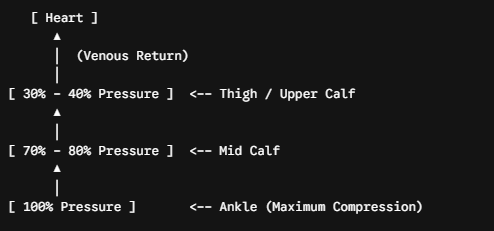
To achieve this goal, the textile manufacturing process must strictly follow a decreasing pressure gradient:
-
Ankle (100% Pressure): The maximum pressure is always applied at the narrowest part of the ankle, where blood pool risk is highest.
-
Calf (70%–80% Pressure): As the sock moves up the lower leg, the pressure systematically decreases.
-
Upper Calf/Thigh (30%–40% Pressure): The pressure tapers off to its lowest point at the top of the garment.
This gradient creates a pressure difference, which forces deoxygenated blood and lymph to flow upward, accelerating venous return and reducing swelling.
Graduated vs. Uniform Compression: The Technical Divide
Many common fitness leggings and inexpensive "compression" socks use uniform compression technology. This means that the fabric applies the same pressure from the bottom to the top.
For business buyers, confusing these two poses significant risks. Here is a comparison:
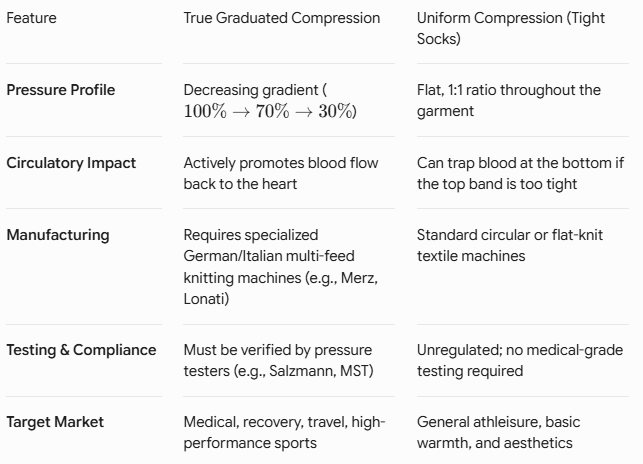
B2B Real-World Testing: Overly tight socks can actually create a "tourniture effect." If socks are equally tight at the knee and ankle, they impede blood flow instead of promoting circulation. Selling such tights labeled as "healthy" or "recovery" carries serious business liability risks and leads to customer dissatisfaction.
The Professional Barrier: Why True Graduated Compression is Hard to Replicate
True progressive compression technology is more expensive in B2B procurement because of its high technological barriers to entry.
-
Precision Machinery: It requires advanced electronic yarn-feeding systems that dynamically adjust the tension of the elastic inlay threads (like Lycra or Spandex) millimeter by millimeter during the knitting process.
-
Quality Control Bottlenecks: Every batch must undergo rigorous testing on specialized Swiss or German pressure-measuring devices to certify the 100%----70% ----30% curve.
As a brand or distributor, partnering with a manufacturer that has mastered this technological threshold can instantly elevate your product from "athleisure fashion" to "functional medical/sports apparel".
Open Toe vs. Closed Toe Compression Socks: Which Is Right for Your Product Line?
Discover the unique charm of your style
Related Article