Compression Socks vs. Medical Stockings: The Ultimate B2B Sourcing Guide for Brands & Retailers

While they may look similar online, they target entirely different markets, follow different regulatory pathways, and require entirely different manufacturing standards.
Before you place your next order, here's a technical analysis of the differences between these two product lines and how to choose the right products for your brand's distribution channels.
1. Regulatory Status & Target Channels
The fundamental difference lies in how global health agencies (such as the US FDA or the European CE) classify these products and where they are sold.
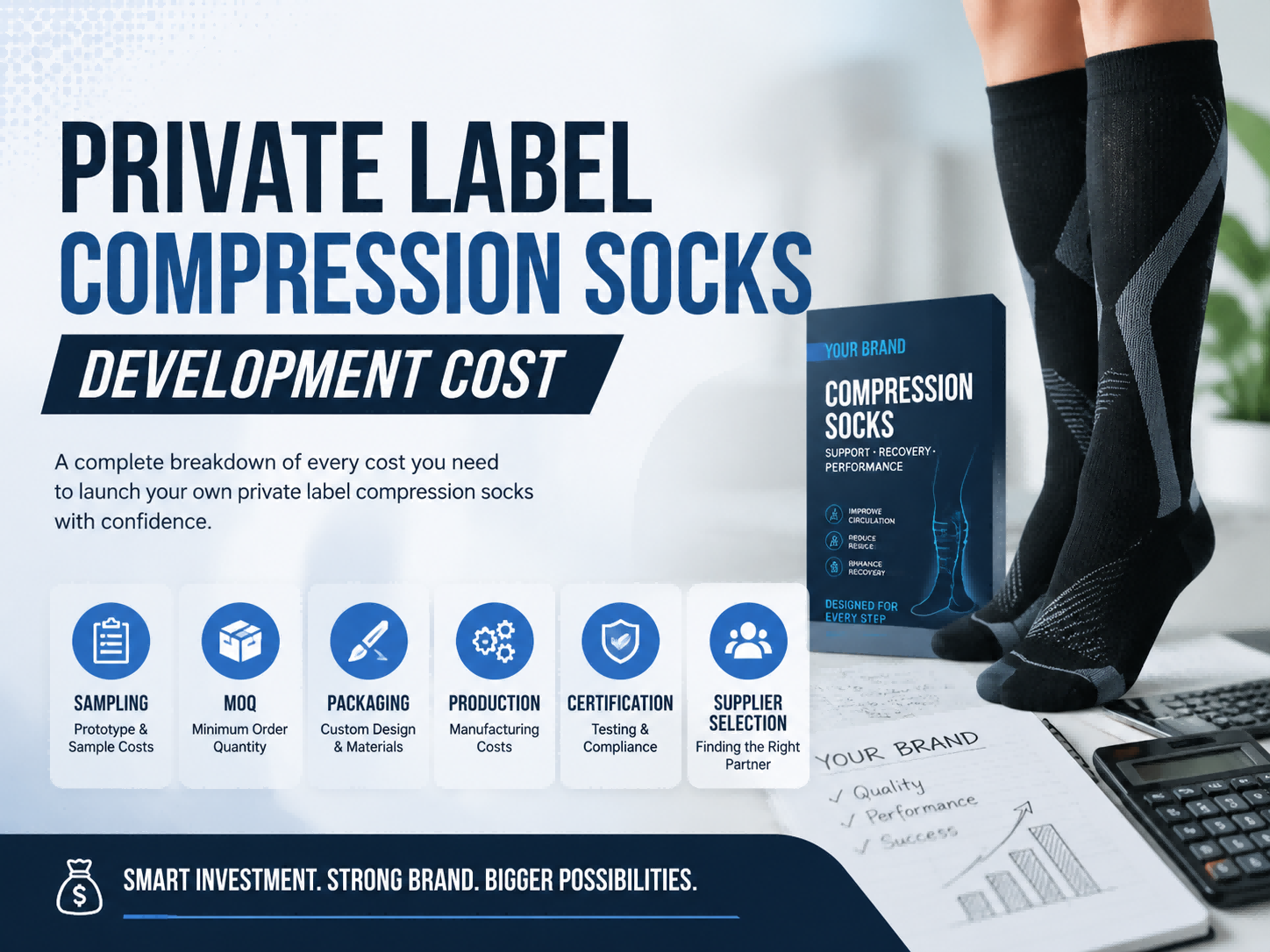
- Compression socks (consumer/sports grade): These socks are considered regular clothing or sportswear and can be purchased without a doctor's prescription.
-
-
Target Channels: E-commerce stores, sports retail chains, airport travel shops, and fitness boutiques.
-
-
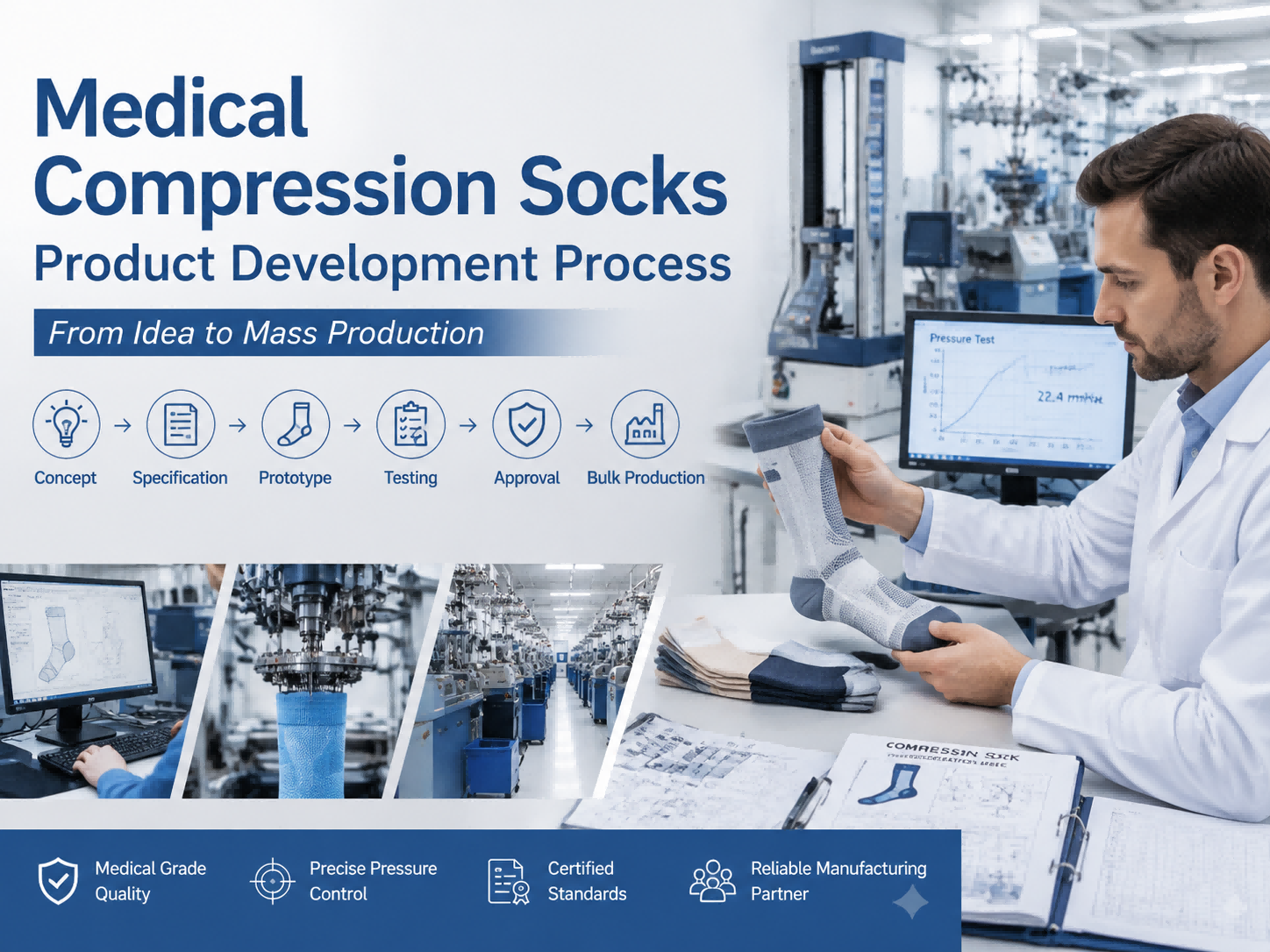
Medical compression stockings (medical grade): These are regulated medical devices (usually Class I or Class II). They are designed to treat chronic venous insufficiency, deep vein thrombosis (DVT), and severe lymphedema.
-
-
Target Channels: Pharmacies, medical supply distributors, hospitals, rehabilitation clinics, and specialized orthopedic brands.
-
2. Pressure Precision & The "Class" System
The manufacturing tolerances for these two types of products are drastically different. The precision required for medical compression stockings is simply impossible to achieve with standard sock knitting machines.
Consumer Grade
Medical Grade
Based on precise millimeter-mercury output, pressure ratings are strictly categorized into internationally recognized class (CCL):
-
Class I (CCL 1: 18–21 mmHg): For mild varicose veins and tired legs.
-
Class II (CCL 2: 23–32 mmHg): For pronounced varicose veins, post-surgically, and healing ulcers.
-
Class III (CCL 3: 34–46 mmHg): For severe lymphedema and severe venous syndrome.
B2B Procurement Guidelines: To produce Class II or Class III medical compression stockings, factories must use high-end German (Merz) or Italian (Lonati) medical compression stocking production equipment equipped with a real-time electronic tension monitoring system. Ordinary sports sock production equipment cannot consistently meet these precise medical elasticity requirements.
3. Product Length, Design, and Fabric Composition
The aesthetic and structural designs of these production lines attract entirely different end users.

4. How to Align Your Sourcing Strategy with Your Business Model
The choice of which production line to use depends entirely on your brand’s core competencies and infrastructure.
When to Source Consumer Compression Socks:
When to Source Medical Compression Stockings:
If you are an established medical supplies supplier, a chain pharmacy purchaser, or a professional healthcare private label brand owner, this product line is ideal for you. While the initial investment is higher—the minimum order quantity is typically 500-2000 pairs per size/color, and you must verify the factory's ISO 13485 (Medical Device Quality Management System) certification—the profit margins are also significantly higher, and customer loyalty is extremely high.
Conclusion
Our factory boasts two specialized production lines: one dedicated to high-volume sports compression gear, and the other a certified medical-grade line equipped with a state-of-the-art Swiss pressure testing laboratory. [Inquire Now] Speak with our team, and we'll help you tailor your technical specifications to match your target market.
What Does mmHg Mean in Compression Socks A B2B Selection Guide
How to Avoid the Most Costly Mistakes When Sourcing Compression Socks from China
Related Article